We've Moved!

Hi and Welcome to the AnimalTourism.com blog. But we've moved just down the street to this site, animaltourism.com/news. Please comment there.
Showing posts with label dolphin. Show all posts

Monday, May 24, 2010

Whales are People, Too, Group Says

The Whale and Dolphin Conservation Society announced this weekend that they've gotten a bunch of cross-disciplinary experts together and decided  that cetaceans have human rights.

The Declaration of Cetacean Rights, which anyone can sign, basically includes the right not to be killed, captured, abused or owned. The society, which met at the University of Helsinki (nice touch), says their rights to "life, liberty and well-being" are due after we figured out that they have more intelligence, self-awareness and culture than we previously thought. The petition gets at the idea that it's okay to care about the fate of not just the health of a species population or ecosystem, but an individual animal.

Most westerners would go along with most of that--although the part that would ban Sea World or swim with dolphin programs might shock some. We already don't hunt whales and changed the tuna industry to avoid dolphins (which are really just small whales). Japan still kills about 23,000 dolphins a year on purpose.  Hundreds of whales are killed each year--no one is sure how many exactly how many--mainly by Japan, Norway, Iceland, Greenland and Russia.


The controversial part, at least in my mind, is that they also "affirm that all cetaceans as persons." I don't think they're persons. Individuals, sure. Anyone who's spent time with higher functioning animals can tell you they're individuals. They don't need to be people to have individuality and rights. Then again, if they didn't put a little bit of crazy talk in there, who would write about them?


Where to Go See Dolphins
Where to Go See Whales

Thursday, April 29, 2010

Groups Recruiting Volunteers to Clean up to 400 Wildlife Species at Risk From Oil Spill

A stunning 400 species of birds, marine mammals, turtles, land mammals and reptiles could be hurt by the Deepwater Horizons oil spill, which is now just 6-7 miles off Louisiana. The current strong winds may blow the muck to shore by Friday morning, the latest report says.

Nola.com obtained a list of 400 species put in harm's way by the oil from the Louisiana Department of Natural Resources. Bob Marshall writes that this is a particularly horrible time for the oil spill--right when birds are migrating through or nesting. The soon-to-be oiled area is:

vital wintering or resting spot for more than 70 percent of the nation's waterfowl, is used by all 110 neo-tropical migratory songbirds, and produces 50 percent of the nation's wild shrimp crop, 35 percent of its blue claw crabs and 40 percent of its oysters. Ressearchers say 90 percent of all the marine species in the Gulf of Mexico depend on coastal estuaries at some point in their lives, and most of those estuaries are in Louisiana.
The New York Times has a great chart highlighting which species are most at risk, mostly migrating birds. The brown pelican was just removed from the endangered species list.

The Oiled Wildlife Care Network--a collection of wildlife responders across California--has sent its director down and is collecting info on volunteers.  They say it's too late to train you to clean up animals but you could become a "convergent volunteer." Specialized groups or state rehabber associations do oil training seminars in preparation for a disaster like this.

The International Bird Rescue and Research Center is on alert, too. They regularly offer classes in Fairfield (northern California) and San Pedro (Southern California) for people to become volunteers.

The International Bird Rescue and Research Center is on alert, too.

Audubon of Florida is recruiting volunteers for the onslaught of oiled birds to be cleaned up at the Center for Birds of Prey in Maitland, FL.

The unified command for oiled wildlife is 800-557-1401.

The Lousiana Wildlife Rehabilitators Association directs residents to call (866) 557-1401 for the Oiled Wildlife Unified Command Center. Not sure which prefix is correct, but it's the same number.

The feds say they're setting up staging areas to protect the shoreline in Biloxi, Miss., Pensacola, Fla. Venice, La., Pascagoula, Miss., and Theodore, Ala.

AnimalTourism.com: Where to Go to See Wildlife

Wednesday, March 17, 2010

Birding Bob: The History of Ravens, Whales and Dolpins in NYC

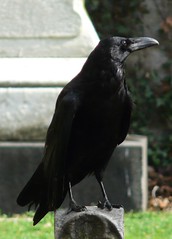
Manhattan's Samantha the Raven
Birding Bob (also known Dr. Robert DeCandido) is a biologist who leads popular and easy to understand tours in Central Park. He lets us publish his newsletter that goes out to his many fans.

With all the talk of Ravens possibly nesting in NYC (Queens), we went back into the historical record to see what we could find out about these corvids in NYC. In a dusty, yellowing journal we found a brief note published in the mid-19th century. It seems as though Ravens must have been occasional visitors to Brooklyn and Long Island back then - see below.

This week we add another bird walk to the mix: Tuesday mornings at 9am, meeting at the Boathouse (details below). Meanwhile, our NYC kestrel research is getting some attention - from outside of New York City!  And later this year, Deborah and I will have an article in a national publication about NYC Kestrels.You can find information (in 14 languages!) about NYC kestrels here.

We have some very good news to report. Our colleague Chad Seewagen (soon to be PhD) had another scientific paper published on his research here in NYC on how migrant birds fare during stopover times in New York City Parks. The research was published in the prestigious Wilson Journal of Ornithology. Congratulations Chad - may you publish many more.

Another of our bird-walkers, Bill Benish, has created an on-line guide to the largest woodpeckers in the world - here's the link to Campephilus Woodpeckers, the famous Ivorybill and all of its relatives in the same genus. 

Below we also present historical and recent reports from around the city including three species of dolphins in our waters in the East River (Manhattan) and Brooklyn (2010); a Humpback Whale (2009); Skylarks and Starlings in Brooklyn (late March 1898-99); and Ring-necked Ducks in northern New Jersey (late March 1923). And FLASH!!! Randy Schutz reports the arrival of Tree Swallows streaming over Jamaica Bay in Queens, near the Environmental Center at 8:55am on 17 March 2010.
=====================================
Good! Here are the bird walks for this week:

Friday, March 19th: 9:00am. Central Park - Meet at the entrance to Conservatory Garden (105th street and 5th Avenue) at 9 am.

Sunday, March 21st: 9:00am
- Central Park - Meet at the Boathouse at 9 am. $10 - we will be there rain or shine.

Tuesday, March 23rd: 9:00am - Central Park - Meet at the Boathouse at 9 am.
$5.
--------------------------------------------------------------------------------------------
The fine print: Our winter through spring SUNDAY walks meet at the [Loeb] Boathouse (approximately 74th street and the East Drive; the SE corner of the lake). - $5 for adults (January-February; $10 otherwise), and $5 for kids.  Easiest way to get to the Boathouse is to enter the park at 5th Avenue and 72nd street and walk west until you find the south to north road (the East Drive) that intersects the 72nd street "transverse." Then just walk north for about 1-2 minutes...Look for a small restaurant type place with chairs/tables outside - we are inside. The Boathouse opens at 8am and has coffee ($1.35), muffins and cookies ($1.75) plus sandwiches ($6) and french fries ($2) .  Bathrooms are located in two places: inside (better - because these are heated - in the bar that is adjacent to the Cafeteria where we meet); and outside - on the south side of the Boathouse. We end our weekend Central Park walks at the Boathouse at about noon.  On FRIDAYS, we meet at 9am at Conservatory Garden, 105th street and 5th Avenue (just inside the main gates).  There are bathrooms open year-round at Conservatory Garden, and that is good.  Easiest way to get there by subway is to take the #2 or #3 train to 110th street and Central Park North.  Then cross the street to Central Park and head east (to the left) toward Fifth Avenue, and then south until you reach Conservatory Garden (about a 7-10 minute walk from the train station; easy and safe).  You can also take the #6 train to Lexington Avenue and 103rd street. Walk west for three blocks and then north by two. Finally, buses run north up Madison Avenue regularly as well. Most Friday bird walks last about two to three hours in autumn-winter, but feel free to leave at anytime, we won't take it personally.  We have an extra pair or two of binoculars to rent, so if you want to rent a pair, just call or email before the walk to let us know.  Also, if you are thinking of purchasing new binoculars, ask us - we probably have used them, and we will let you know how to get them for the best price. These days we like a relatively unknown brand by the name of  Zen-Ray, specifically their 8 x 43 model.
---------------------------------------------------------------------------------------------
Here is what we saw last week (selected highlights) with some anecdotal notes and observations.  Not all species we saw are reported here - we list the best:

Friday, March 12th (North Woods) and Sunday, March 14th (Central Park, Ramble) - In last week's summary we detailed how some sparrow species were singing half-songs, and if this portended another several weeks of winter. Yes - despite our best attempts to look for birds in the rain, we had very little luck. We found Fox Sparrows and Gadwalls in different places in Central park, and by Sunday, there were many Song Sparrows in areas they had not been previously. So last week was a good one for catching up on writing scientific (and popular) articles, and getting ready for spring...more next week.
======================
Notes on Some Rare Birds in the Collection of the Long Island Historical Society. William Dutcher.

Corvus corax sinuatus. American Raven. -- One specimen in the collection. Col. Pike says: I never met with this bird. While shooting in 1836 at 'Comac Hill' my companion, Mr. George Bartlett, killed a fine specimen and I skinned it; it is the one in the collection. Philip Brasher had one in his collection that was killed in the woods near Prospect Park. (This specimen is now in the collection of the University of Vermont, Burlington, Vt., this institution having purchased the Brasher collection.) This was in 1848. These are the only specimens I have ever known to be killed on Long Island."

The Auk 10: 275-276 (1893)
================
4 March 2010 - Brooklyn, New York City: A dolphin was sighted in Newtown Creek. It may be one of the two that were seen two days ago near the Brooklyn Navy Yard. The Riverhead Foundation for Marine Research and Preservation will be monitoring the dolphin and would attempt a rescue mission if the animal seemed in distress. - Bob DiGiovanni

[These were Short-beaked Common Dolphins (Delphinus delphis), a species found within New York during the winter season along with the White-sided Dolphin (Lagenorhynchus acutus) and the Harbor Porpoise (Phocoena phocoena). The Common Dolphin was the species involved with the mass stranding event in 2007 in East Hampton, Long Island. We have been receiving reports of dolphins within the East River for the better part of the last week. Often the sighting of a lone dolphin is not a good sign. We are attempting to find out if there is food in the area. Kim Durham.]

Common Dolphin (Short-beaked)
White-sided Dolphin
Harbor Porpoise
=================================
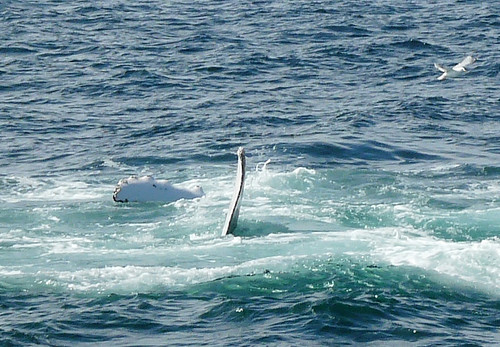
2/25/2009 - New York Harbor, Lower Bay: The Coast Guard announced that a humpback whale became entangled in a lobster pot and netting south of the Rockaways. They set up a 500-yard safety zone around the whale, which was eight miles east of Sandy Hook, NJ, near the approach to Ambrose Channel, the head of the Hudson Canyon, and active shipping lanes. The Coast Guard Cutter Penobscot Bay and a vessel from the National Oceanic and Atmospheric Administration (NOAA) were on the scene to protect the animal. The whale, reportedly visible on the surface and breathing, according to the Coast Guard, was described as a juvenile humpback, about 25-30 feet long. - Jamie Collins, Executive Officer, USCGC Penobscot Bay

[Hudson Canyon: The post-glacial draining of pro-glacial lakes in the interior of New York State 12,500 years ago, and possibly even older glacial meltwaters, carved this magnificent underwater canyon that runs from the mouth of New York Harbor 120 miles seaward to the great abyss of the North Atlantic. This ancestral "Hudson River" is 3,600 feet deep and 5.5 miles wide in places. Tom Lake.]

2/26/2009 - New York Harbor, Lower Bay: According to the New York Times, the humpback whale entangled in fishing gear was freed this afternoon. The whale, which weighed perhaps 20 tons, was freed after an entanglement team from the Center for Coastal Studies of Gloucester, Mass., cut away the gear, which was wrapped around the whale's tail.

[It is not uncommon for humpback whales to be this close to New York Harbor. Humpbacks follow a food supply of small fish and this whale was probably one of about 900 whales in a group called the Gulf of Maine feeding component of the larger Western North Atlantic whale group. Teri Frady, NOAA.]
===========================
Notes on Brooklyn Birds (1898-99).

Skylark.
Alauda arvensis. The English Skylark is at present firmly established as a Long Island resident. Between Flatlands and Holy Cross Cemetery, and to the east of the latter, many are to be seen and beard. On March 28, 1898, while on the Neck Road, I heard for the first time the twittering, burring, continuously sustained song of this species and saw it rising gradually on fluttering wings up into the blue ether. At a later date one was heard singing continuously for eight minutes while in the air and for two minutes more after alighting on the ground. They were neither seen nor heard in September and October, though doubtless they might have been at suitable times; namely, early in the morning or in the evening. Several were beard and seen at the same time in the locality indicated above. It is likely they will later be found at other points on Long Island.

Starling. Sturnus vulgaris. About a mile in a straight line from the colony of Skylarks, I first saw the European Starling, where it was afterward seen repeatedly. Near Kensington Station someone within the present year has placed in a large tree several bird boxes, which are occupied by the Starlings. The tower of the Boys' High School in Brooklyn noted in the article referred to as occupied by these birds, still retains its attractions for them. This was probably the original nesting colony on Long Island. Another colony now occupies the steeple of a church at Bedford Avenue and Madison Street. At several points in the environs of Brooklyn the Starlings have been seen, where they were evidently visiting for the purpose of obtaining food, while at various points in the city itself they are commonly observed.

Auk 16: 190-193 (1899)
=======================
Ring-necked Duck in Northern New Jersey. -- On March 25, 1923, the writers were as usual on spring Sunday mornings on the marshes of Overpeck Creek, Bergen County, studying the waterfowl, which seem to increase in variety and abundance every year. On this particular morning nine species of Ducks were found, the commoner such as the American Merganser, Black Duck and Pintail in abundance. After practically all the Ducks had flown away, a pair of Ring-necked Ducks were found hiding in the grass on the opposite bank. Soon, however, they swam out into the creek in the full blaze of sunlight, and we watched them for half an hour as they floated on the quiet water. The drake was immediately recognizable by its dark back, and triangular shaped, puffy head, and the
female was a dark bird, without any white ring around the bill. A few minutes before we had seen a flock of Lesser Scaups at about the same relative distance, and the white backs of the males, and the white faces of the females gleamed in the sun. This species, which is well known to Griscom in life, has not been recorded from northern New Jersey. It is interesting to note that the preceding fall and winter produced an unusual number of Ring-necks from various points along the Atlantic seaboard.- Ludlow Griscom and J.M. Johnson, American Museum of Natural History.

Monday, March 08, 2010

Will Asking People To Text for Dolphins Work Post-Haiti?

Last night dolphins near Taijii, Japan, were oblivious to the break The Cove won an Oscar. The film's hero, former Flipper trainer Ric O'Barry, has been trying to show Taijii's dolphin slaughter to the world for years, even if it meant walking around with a TV on his chest. So, it's no surprise he'd use the stage for the dolphins. O'Barry unfurled a banner saying "TEXT DOLPHIN TO 44144".

What was the reaction? Twitter immediately ricocheted the message around thousands of time--and it's still bouncing. This USAToday blogger says the sign--and its inherent naughtiness--got him to look up the film. But over at the Huffington Post, they ran a story explaining "What Happens if You Follow Ric Barry's Sign?" The answer: you're signed up for text message updates, up to 30 a month. Call me old-fashioned, but I subscribe to his blog, so that's about 30 more than I need.

The Haiti earthquake taught the public that the easiest way you can donate money to a cause is by texting a charity. I doubt that causes can ask you to just text them anymore without people worrying how much it will cost. The various charities send you back a confirmation before your cellphone carrier sends off your money, Charity Navigator explains. If you haven't done it, you won't know that.

O'Barry wants you to write a letter to Obama. Taiji was, predictably, annoyed at the win. Controversy is swirling, the LA Times says. But what else does controversy do? Before the movie Japanese fishermen killed about 2,000 - 3,000 dolphins a year in Taijii and about 18,000 to 27,000 elsewhere, the Japan Times reports. The little town is also the last known place to catch wild orcas--and where fishermen ride them "rodeo style," the Whale and Dolphin Conservation Society reports. Japan claims it's cultural imperialism to cringe at their killing of dolphins while we kill and eat cows.

The Cove has already pushed the town to halt the the dolphin slaughter for now. Expect more backlash when the film gets broader play in Japan. That'll happen with or without your text messages.

See How You Can See Dolphins in the Wild


Excerpt from the Whale and Dolphin Conservation Society 2001 report Captive Orcas: Dying to Entertain You.

Japan: 1972 - to date. 28 orcas captured, of which 19 were taken into captivity (14
are now dead, 5 survive)

To date, no marine park outside Japan has purchased orcas taken from Japanese waters. Captures for dolphinariums have been largely unregulated, being carried out by inexperienced local fishermen using two main methods - harpooning, and herding the animals into a net. Capture methods can be very crude - attempts to wrestle the whales into submission by riding them 'rodeo-style' have been reported. 

Several orcas have died shortly after capture: for example, three orcas captured off Japan in 1979 had all died within three months of capture. The better Japanese marine parks, perhaps wary of
being tainted by association with 'iruka no oikomi ryo', the annual drive fishery responsible for the slaughter of thousands of small whales and dolphins, have increasingly turned to Iceland and North America for their orcas.


However, on February 7th, 1997, a group of ten orcas - believed to be transients - were taken at Hatajiri Bay, near Taiji, Wakayama prefecture. Fishermen from the Isana Fishing Co-operative first spotted the group of orcas, including two calves, about 50km off the Japanese coast. They sent eight fast boats out to encircle the pod and, by using water bombs and banging on iron rods to create a barrage of noise, succeeded in driving the group into the bay.

Monday, February 22, 2010

Silly Stories in Animals This Week

Conan O'Brien finds a new way to fill time: kissing dolphins.


I didn't steal any pigs, a Chinese farmer claims. Then he opens the gate and the eight stolen pigs trudge out and home 1 km. He confessed.

A decade-long survey of ocean wildlife is almost done and boy do we have some freaky fish.


You thought making a shadow puppet of a rabbit was hard? Tens of thousands of starlings do you one better.


This is not the first time this Australian weatherman has been pinched on the bum by a bird, says the anchorman.

Sunday, January 31, 2010

Coney Island Marine Mammal Tour Yields Only Polar Bears

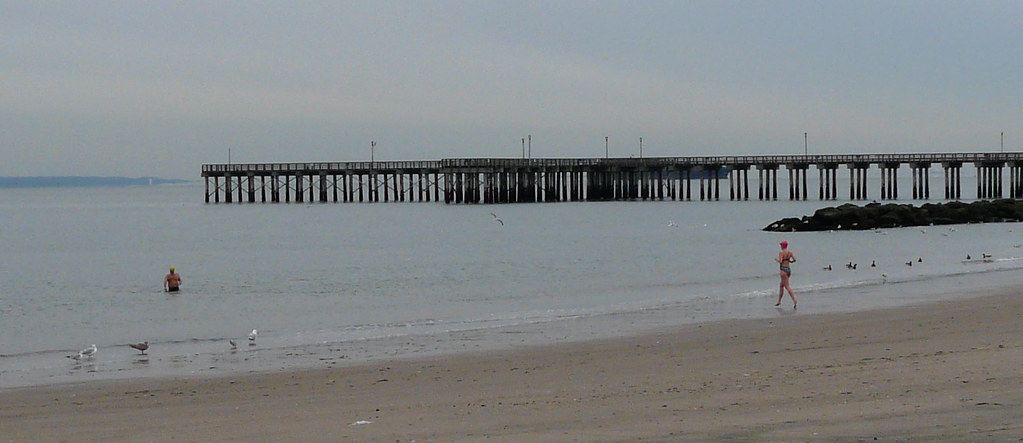
The New York City Parks Department's first shot at a marine mammal tour from Coney Island yielded absolutely none of the hoped for seals, porpoises, dolphins or whales. But we were all shocked and delighted to see real Coney Island polar bears going into the water in bikinis on what turned out to be one of the coldest days of winter. their existence is well-documented on every cheesy local news, but I consider it a rarity to see one in person.


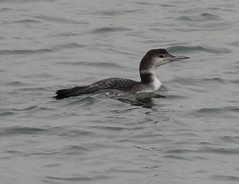
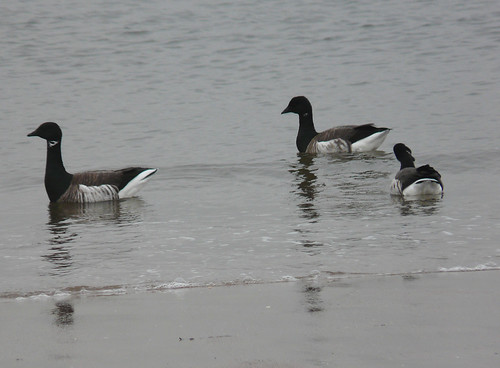
Our park ranger guides, Marissa and Andy, couldn't have been more enthusiastic or knew more about what we might hope to see. They had us carefully watch a cluster of birds feeding on the surface to see if we saw any seal heads pop up. Andy told us about the loons and Brant Geese (Branta bernicla) wading by the polar bears. Marissa told us stories about dolphins she's seen regularly patrolling east to west off the Rockaways. She told us about the time a seal hauled out on Coney Island and helpful New Yorkers dragged it back to sea--twice--before realizing it just wanted to sit on the sand.

 Wildlife watchers know there are no guarantees in this business. So several of us consoled ourselves with another Coney Island rarity: pizza. Maybe we'll try one of the other tours to see seals around NYC.


Where to See Seals

Tuesday, October 20, 2009

Which Animal is Having More Fun? The Horny Parrot or Spiteful Dolphin?

Is it the horny, endangered parrot, pointed out by Zoologix? (This flightless Kakapo name Sirocco was hand-raised and imprinted on people. So it's only natural he wants to hook-up with people. Watch out, he's looking for more friends on facebook)

Or the spiteful dolphins, who flick jellyfish out of the sea at every opportunity?

Friday, September 11, 2009

An Easier Way to Find a Good Whale Watch on the East Coast?

Picking out a whale-friendly East Coast whale watch just got a little easier. NOAA and the Whale and Dolphin Conservation Society just started Whale Sense, a voluntary program to ensure tours from Virginia to Maine don't bother whales.

The rules are complicated--more than just stay back 100 feet, though that is the basic distance. (If the whale approaches you, stay put. If it's a right whale, back off 1,500 feet.) What I found more amusing were the rules against advertising showing whale watchers touching, swimming with or even chasing the whales. Is Jerry Bruckheimer running a watch somewhere?

So far the group has signed up five companies, mainly in Massachusetts. I count at least 30 tour companies from Virginia to Maine, with 18 going to Stellwagen Bank--not included the odd charters that line the whole coast. So what about the ones not on the list?

Even Frank Kelley, operations manager for Mass Bay Lines (listed) says that right now the program is so new that you can't judge an operation for not participating. Lots of the tours work with other whale groups. For example, Bar Harbor Whale Watch Company is tied to Allied Whale. The New England Aquarium's whale watch, which I just went on, isn't part of the program yet (they're still examining the details), says spokesman Tony LaCasse. But since they already do most of it and they helped push voluntary standards decades ago, they'll probably be part of it.

When you're out on Stellwagen it's not the commercial whale watching boats you see encroaching on whales, but the tiny recreational fishing boats. Kelley says many tour operators worry that the small boats don't understand the protocols (which is elaborate when it comes to many boats wanting to see the same whales). NEAQ's LaCasses says that personally he'd like to see an enforcement presence on the water--like the Coast Guard is for boating regulations.

When I talked with marine mammal expert Toni Frohoff (she's a behavioral biologist and research director at TerraMar Research) she mentioned that generally it's better to have one big boat in the water around a whale instead of a bunch of little ones. At first that seems counterintuitive; we normally don't think of going out in a big, hulking, Hummer of a boat as being eco-friendly. But that's what it is, at least to the whales.

The tricky thing for whale watchers is picking tours that won't annoy--or hit--the whales. In Puget Sound tour boats are known to crowd the orcas, which could interfere with their eating or mating. I haven't seen that on the vast waters East Coast boats troll.

Consumers can't easily tell from an ad or website that attitude of operation. (Well, ok, I am a little skeptical when I read "Imagine the sight of dolphins dancing and frolicking right alongside The Silver Bullet. See whales surfacing and breaching...[from a] shiny, brand new 70 ft. long ocean going projectile." But most whale watches at least claim to be whale-friendly. But is that like a processed cereal labeled as organic? I hope the Whale Sense program grows and offers up an easy way for wildlife watchers to pick the responsible tours.

Monday, August 31, 2009

The Cove: By Seeing the Movie, You're Participating in the Effort

The Cove is a movie about dolphin slaughter in Japan, but the filmmakers have the sense to know that an hour of dolphins being harpooned, flailing and bleeding to death would be unwatchable. Instead they tell the fascinating, adventure story of trying to get footage of a slaughter of dolphins that Taiji, Japan tries desperately to keep secret.

Spoiler alert: they get the footage. And here's where the audience feels like they're participating. The point of the effort is to get the word (and video) out on how horrific and unnecessary the process of killing 23,000 dolphins a year is. It's an act of faith by the filmmakers that once the world knows this will have to stop. And just by witnessing The Cove, you fee like you're part of their journey.

They also list things you can do to help. You can write President Obama and the Japanese. You can donate. You can carefully choose your seafood--for your own health and for the fish's sake.

One of the actions they suggest is that you pledge not to go see dolphins in captivity. (The sale of show dolphins supports dolphin slaughter.)

Here are some places you can go see dolphins in the wild instead.

Monday, July 27, 2009

Moko, the Lonely New Zealand Dolphin Who Loved Too Much

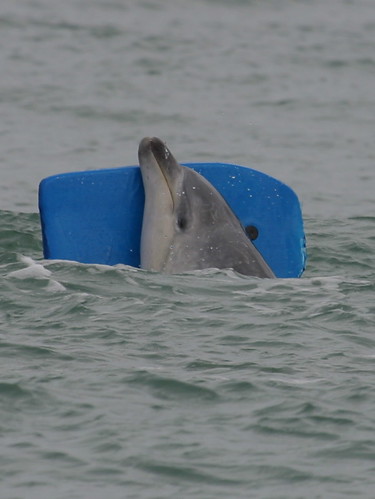
Photo of Moko earlier this year courtesy of Chris & Lara Pawluk
Moko, a bottlenose dolphin who lives off Mahia Beach, New Zealand, is famous for being friendly to people in the water. But Sunday, she nearly loved a visitor to death. "We were playing around for a while but then when I wanted to go back in, he just wanted to keep playing. I became exhausted and started to panic," the woman told the BBC. When she screamed, a local bar owner came out in a dinghy to rescue her.

Moko is what's known as a "lone dolphin," a rare but well-documented kind of dolphin that seems to want to hang out with people. Since it's winter in New Zealand now, speculation is that she just got lonely because there aren't as many people in the water.

The standard criticism of people swimming with wild dolphins is that dolphins get annoyed or injured. But, even Project Jonah chief executive Kimberly Muncaster, who has warned people to keep their distance from the chummy 3-year-old dolphin, acknowledged that Moko actively seeks out people's attention. "Moko has undoubtedly captured the hearts of Kiwis, but she is in danger of getting hurt if she isn't treated with respect, and those seeking to get close to her are also putting themselves at risk," Muncaster warned last year.

The woman, who was too embarrassed to give her name, says Moko wasn't trying to hurt her. "I've spent quite a bit of time swimming with Moko and I'm a strong swimmer so I wasn't worried at first," she said.

Moko has been hanging around Mahia Beach for about a year and half, dragging in tourists--whiles sometimes dragging buoys out to sea for sport. "She follows boats in and out of the bay and plays havoc with my cray pots. She bunts the buoys and drags the pots together, tangling them," says Mahia local Bill Shortt. Moko also gives people presents of fish. She gained worldwide fame for saving two pygmy sperm whales.

Marine Biologist Ingrid Visser says Moko has scars from a boat propeller and fish hook and that has been the demise of many other "lone dolphins." “In some areas of the world these ‘lone’ dolphins have inhabited the area for many years," he told the Gisborne Herald. "However, it is sad to note that of the nearly 30 individual ‘lone’ dolphins which have been well documented from around the world, at least 14 have been injured or even killed as a result of interacting closely with humans."

Seems like Moko would stand a better chance against boats and fishing lines in the harbor she knows so well. I hope this incident gets more people to spend some time with her so she doesn't get lonely. It seems like a wonderful animal tourism opportunity: come see Moko, the friendly dolphin, in the low season, when she really, really wants your company.

Want to see a dolphin yourself? Here's a map I'm putting together of some (mostly US) places?
Got a suggestion for another one? Send it here.

Monday, April 13, 2009

The Dolphins NOAA Wouldn't Let Others Save Have Died

Last summer a pod of 16 dolphins swam up the Shrewsbury River in New Jersey. When winter came, they didn't leave. So the Marine Mammal Stranding Center wanted to shoo them out. The National Oceanic and Atmospheric Administration (NOAA) said no. They were worried that trying to push the dolphins one way could make them go further under the ice--which has happened before. But in a broader sense their argument against action was: let nature take its course; we can't save all the wild animals.

Now the fifth dolphin has turned up dead.
In January we knew of five left, then didn't see them anymore.

So far scientists haven't been able to conclusively id one of the dead dolphins as part of that pod since its 8 1/2 foot carcass has rotted so much.

The argument against hurting the dolphins by trying to rescue them seems to have fallen apart. All that's left is the philosophical bent of NOAA. It doesn't seem fair that since the marine mammal stranding center, whose whole expertise is helping these animals in New Jersey, wanted to do its job without any taxpayer support that NOAA should have gotten in the way.

Sunday, January 25, 2009

Last NJ Dolphins Escape Icy River--Maybe


The last of 16 dolphins who have been up the Shrewsbury River in New Jersey since the summer may have escaped back to the ocean. Witnesses at Bahr's Landing restaurant say they saw three to five dolphins on January 15, but haven't seen them swim back in.

Of course, it's very easy to imagine dolphins slipping by even the most diligent watchers--let alone people otherwise occupied with eating and working in a restaurant. But it's nice to think they got out. Bob Schoelkopf, co-director of the Marine Mammal Stranding Center in Brigantine says the last time he saw them they were thin and weak.

Over the summer 16 dolphins were spotted in the river--much to everyone's excitement and worry, first about boating accidents and then about the ice.

In 1993 dolphins drowned in the river after it froze; people had tried to shoo them out to sea, but they went under the ice.

So far this year three dolphins have turned up dead.

The Marine Mammal Stranding Center, alone with many dolphin watchers and lovers, wanted to try to push or lure them out to sea. But the federal officials in charge of dolphins, National Oceanic and Atmospheric Administration, wouldn't let them. Not even if they did the rescue work on their own. They claimed that the dolphins were just trying to expand their territory and people should stand back and let them. The Chronicle Herald in Canada ran an obnoxious headline on an AP story: Group fights science to save ‘frightened’ dolphins.

It's amazing to find these Bush administration officials embracing science at all. Or evolution--they seem to be arguing that if the dolphins die it's part of some natural selection process. I can understand not wanting to spend federal money to attempt a rescue, but banning a private, highly trained rescue group is going way too far. It's debatable whether it's worthwhile, but if someone decides it's worthwhile for them, who is NOAA to stand in the way?

Saying that we can't possibly interfere with nature is ridiculous. We interfere with nature all the time. We fish, hunt, pollute, develop. We also rehabilitate wildlife in every state. I certainly hope in the Obama administration we're allowed once again to save a handful of wild animals without government interference.

Photo by Jackie, Sister72

Friday, August 22, 2008

Mexico trying to save the last 150 vaquita porpoises

Mexico just announced it would spend $16 million to get fishermen in the Bay of California to learn not to catch the vaquita porpoise, which is down to only about 150 animals. A website dedicated to saving the vaquita estimates 39 to 84 die each year in nets.


There are so few left that some have even argued they're extinct, so why bother trying to save them? The Vaquita Marina group says people still do see them--and catch them in nets--so they know there are still some around. They've even come up with a handy map of vaquita sightings.
They say that the cartoon-faced porpoise "can not be easily observed, since it flees when boats appear and remains under the water for several minutes without having to come out to breathe."


Go to the Best Places to See Anaimals in California
Where to See Dolphins


If there really are 150 left, the program amounts to $10,000 per vaquita--and a good example of how expensive it is to save a species if we let it dwindle so low. What they'll actually be spending the money on, according to Discovery News, is paying fisherman $4,500 not to fish in the reserve, $30,000 to learn safer techniques and $60,000 to turn in their boat and quit fishing.