We've Moved!

Hi and Welcome to the AnimalTourism.com blog. But we've moved just down the street to this site, animaltourism.com/news. Please comment there.
Showing posts with label chicago. Show all posts

Friday, April 23, 2010

Happy Joint Birthday, Indiana Wolves, Enjoy Your Frittata

Would you like to treat a wolf to a frittata? What if you know it was his birthday? And that the wolf happened to looove frittata? Indiana's Wolf Park--probably the most innovated wolf sanctuary in the country-- is having a joint birthday party for its wolves this Saturday, April 24.

All the wild canids (including coyotes and foxes) at Wolf Park breed and give birth around the same time. Last year the center, which started in 1972, started having an adorable birthday party. You can buy your favorite wolf a birthday cake (a $25 donation) and then get a picture of them devouring it.
The cakes aren't really cake, but a frittata with eggs, butter, cheese and chunks of meat, says assistant manager Dana. "The wolves don't really have much of sweet tooth," she says. They are very popular with the wolves. The human visitors enjoy the happy spectacle.

For the wolves that live in pairs or their own enclosures, delivering the cake isn't much of a problem. But some in the main pack got ripped off last year. "The trickeist ones we have are the main pack. Last year we made larger cake they could all eat. One wolf, Tristan, the alpha a the time, just ate it all and was sick afterwards with a tummy ache," Dana says. This year, they'll deliver individual cakes, which they expect the wolves to run off with.

Cake time is 2 p.m. Saturday. Since they don't want any wolves to go without, the $25 really goes to the cake fund. The park spends about $62 a day just to keep each wolf fed, happy, safe and healthy. That's about $23,000 a year per wolf, not including frittata costs.

Wolf Park: This month the center is open weekends 1-5 and on Saturday nights for a howl. In May they'll be open six days a week. General admission is $7, $5 for kids 6-13, little kids free. The howls are the same price. Joint admission is $12. They've also got photo and behavior seminars. They're a little over an hour from Indianapolis and two hours from Chicago (765) 567-2265 4004 East 800 North, Battle Ground, Ind.


Where to Go To See Wolves
See More Animals in the Midwest

Monday, April 05, 2010

Pelicans Visit Chicagoland for Spring Break

Unison by jpmatth
White Pelicans are just about hitting their peak numbers in Chicagoland. Practically nobody saw these big white birds a decade ago. Now you can see them every spring. Now you can drive 50 minutes from downtown Chicago and found up to 250 of these huge, exotic white birds in a tiny lake in a bland exurb housing development. 

The Daily Herald highlighted Nelson Lake in the Dick Young Forest Preserve, where they've been appearing for eight years. Kane County Audubon now says now they've left Nelson Lake--which was originally created by a beaver dam--and moved to nearby Carson Slough. On April 3 birders saw 133 white pelicans in this small manmade lake in a housing development right off the Sugar Grove exit from I-88.

Prairie State Outdoors says the 30-pound birds have somehow changed their migration habit so that they are increasingly showing up in Illinois, especially near the Illinois and Mississippi Rivers. (Batavia is about 20 miles from the Illinois.) The white pelicans (also called Rough-billed Pelican (Pelecanus erythrorhynchos)) travel between the Gulf of Mexico and Canada but they only stop in northeast Illinois in the spring and only in this one area.

Kane County Audubon's Jon Duerr, who used to run the forest preserve, told WTTW says birds travel around 300 miles between breaks. They stop for a couple weeks to feed. They don't dive like brown pelicans; they work together to herd fish. The  This year they arrived March 19 and they'll probably be totally gone a month later.

Where to See Odd Birds
See More Wildlife Around Chicago
Check Out Kane County Audubon

Monday, December 21, 2009

Get a Glimpse of Native Illinois Wildlife on their Winter Break--Join the Wildlife Prairie State Park

Just a couple hours west of Chicago a herd of bison is taking the winter off from delighting kids. Wildlife Prairie State Park--a unique combination of wildlife center, praire re-enactment and park--closes for the winter.

The animals in big herds, the elk and bison, are taken off public display to give their summer pastures a rest, says park spokesperson Kelly Stickelmaier. The enclosures (80 acres for the elk) are big enough to approximate a natural setting, but not so huge you can't see them. (Just check the park's very active flickr group and you can see how much of the animals visitors can see.)

The park's 18 bison are especially cooperative, coming up to the viewing stand, where they're fed at 1 o'clock.  "The elk are a little more persnickety, especially the boys," Stickelmaier says. Because the bison herd reproduces, the park sells off however many are born each year to keep the total at 18.

Badger at WPSP
Badger at WPSP,
originally uploaded by Mark Koonce.
I don't think I've seen another wildlife park that has badgers--and, believe me, I've looked. They've also have otters, eagles that came in through wildlife rehabilitation, skunks, bobcats and cougars.

Philantrhopist Will Rutherford started the park in 1978 mainly as a kind of rehab area for animals from the Brookfield Zoo. The park eventually shifted to native animals, then Rutherford gave the park to the state in 2000.

 Rutherford's family's Forest Park Foundation still supports the park, the Peoria Journal-Star says, but it can't make up for all the money now disgraced governor Rod Blagojevich cut from their budget. In one of his last acts, Blago used a line item veto to chop $828,000 from the Peoria park's $1.2 million budget, prompting worries it would close, according to Prairie State Outdoors. The park has come up with some creative ways to raise and save money to support their animals. You can still visit while the park is closed in winter if you become a member or rent a cottage. You can rent out a room for a business meeting or party--maybe even the one that looks out on the wolf pen. And they've even loaned out a couple bears. Certainly it's worth a visit and maybe a membership.


Join Wildlife Prairie State Park
Find other places to see wildlife in the Midwest with this AnimalTourism.com map
Where can I find the nearest buffalo herd?

Saturday, June 21, 2008

Chicago Finds a Feral Alligator

Yesterday Chicago Police pulled a small (five or six feet) alligator from the Chicago River on the near South Side near 37th Street.
This almost certainly was yet another example of a discarded exotic pet that some idiot thought would be cool, then threw out when they finally realized they couldn't handle it.

But that opens the big question of when it was released and how long was it able to survive in the wild in Chicago? At five feet long, that alligator is probably several years old.

Did it really survive an Illinois winter or was it released this spring? Did it find some industrial water release that keeps water warmer (the trick of some Florida manatees)? According to the Florida Museum of Natural History, alligators can tolerate limited freezing temperatures.

The alligator was captured by two great volunteers from the Chicago Herpetological Society. After tests it will go "back to the South" one of the semi-anonymous volunteers told the Sun-Times.

If it was raised as a pet I doubt it could be released in the wild. I wonder where he'll go?

The San Diego Zoo says that the American Alligator Alligator mississippiensis "was once considered endangered, but through protection plans, management, and captive propagation it has made a remarkable comeback."

Where to See Wildlife Around the Midwest

Wednesday, January 04, 2006

Wolves and Bear Find Shelter with Chicagoland Biology Teacher


Big Run Wolf Ranch, Lockport, IL


Three species of wolves (British Columbian, Arctic and Grey Timber) interact intermingled in three different pens. Biology teacher Julie Basile and her husband John (who founded the ranch 18 years ago) track their interactions and move them to different groups when they see there's trouble coming, either in the form of too rough dominance fights or mating season.
Once secluded, the ranch is now crowded by houses and planned businesses. But the ranch is still growing. They visit schools or have nearby scouts and school groups come visit and learn about wolves. The wolves jump up and lick their caretakers.


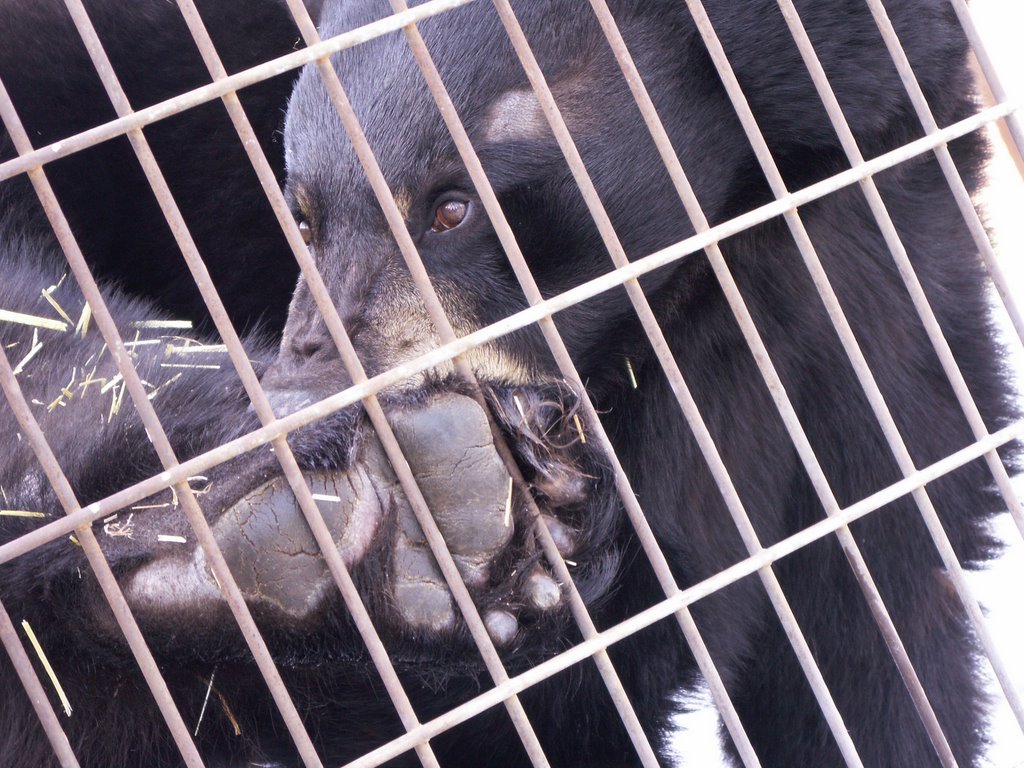
In addition to the wolves, the Basiles have taken in other animals that need help and a place to live. Wildlife officials came to John in 2000 with a 20 pound black bear cub that someone had bought at a flea market for $200 and tried to raise in an apartment until neighbors thought better of the idea. They would have euthanized the bear, now known as Kuma, that day, but the ranch took the bear in and built a proper enclosure, pool, shower and hibernation hut. Kuma likes to show off to crowds and wrestles with John.

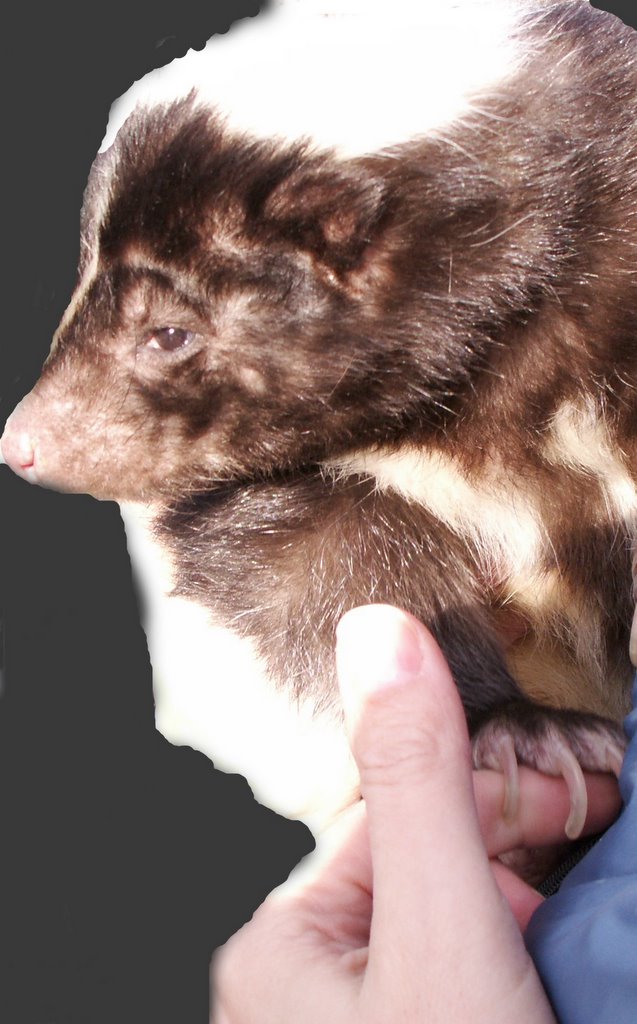
The ranch also has several shy coyotes, wild cats, horses, dogs, peacocks and a rescued descented skunk. Kirby looks different than a wild skunk because he's a domesticated variety and he smells different because he's been descented. He's friendly, cuddly and instintively holds a person's fingers with his claws like a baby does.

Where to See More Animals in the Midwest
Where Else Can I See Wolves?