
The New York Times had an interesting story Monday about a endangered and strange animal tourist attraction in western Pennyslvania. The animals themselves aren't endangered. They're just carp and mallards. For 75 years the carp have been gathering in such thick numbers that mallard ducks walk on their backs to get bread thrown by tourists.
Linesville bills itself as "Where the Duck Walk on the Fish." The problem is that someone in the Pymatuning State Park has decided that the duck droppings have reached unacceptable proportions. So they are demanding that everyone switch to pellets. That would rule out the ducks. And the many duck-themed businesses around town. Which has locals fighting back.
The Pittsburgh Tribune-Review has looked into the environmental impact of the situation before. The spectacle is supposed to bring in $55 million to the area. One study by Clarion University biology professor Andrew Turner found that the bread increased phosphorous in the reservoir by 50%. Too much phosphorous could produce too much algae. But the paper says that a local fish hatchery and sewage plant probably produce more phosphorous.
Look, the attraction is by no means natural, but that doesn't mean it's not worth sparing. People enjoy getting a close up look at the carp and ducks. Somehow it's always the people who just want to see nature who end up on the short end of the stick in these economic equations. It's ridiculous to say that we should get rid of the fish-walking ducks because they're unnatural when we're talking about a manmade reservoir near a fish hatchery.
Where to See More Animals in the Northeast
Where to See More Odd Birds
Showing posts with label duck. Show all posts
Showing posts with label duck. Show all posts
Tuesday, September 02, 2008


Sunday, March 05, 2006
Berkshire Bird Paradise: The Biggest Bird Sanctuary in New York
Berkshire Bird Paradise, Grafton, NY

Bird Paradise is one of the country's biggest bird sanctuaries. (It's also one of the hardest to find, off Route 2 in NY, near the Massachusetts/Vermont border.) More than 2,000 birds (100 species) live here and lots of them are the big ones everyone wants to see: bald and golden eagles; many kinds of large hawks; exotic pheasants; former pet songbirds; barnyard refugees; black swans. You'll walk through a long green house-esque tunnel of former pets, then out to the yard. Ducks, geese and swans swim in a pond while pheasants and chickens wander around. Twelve bald eagles hang out together in the back. At the right time of year, visitors can hide in a special blind to watch a disabled bald eagle matings pair, Ross and Marilyn, and their family. The chicks they raise fly off to the wild (though return for occassional visits).
Director Peter Dubacher started rescuing birds here in 1975. Friendly supporters drop by with food, building supplies as well as money.

When chicks aren't around, the emus still the show. These giant gangly birds are very curious about their human visitors. About human height, they seem to want to dance with you from the other side of the chain link fence. They twist their necks around to get a closer view and beg for food.
About 40% of the birds here couldn't make it in the wild and so will live out their lives here.
Where to See Neat Animals in the Northeast

Bird Paradise is one of the country's biggest bird sanctuaries. (It's also one of the hardest to find, off Route 2 in NY, near the Massachusetts/Vermont border.) More than 2,000 birds (100 species) live here and lots of them are the big ones everyone wants to see: bald and golden eagles; many kinds of large hawks; exotic pheasants; former pet songbirds; barnyard refugees; black swans. You'll walk through a long green house-esque tunnel of former pets, then out to the yard. Ducks, geese and swans swim in a pond while pheasants and chickens wander around. Twelve bald eagles hang out together in the back. At the right time of year, visitors can hide in a special blind to watch a disabled bald eagle matings pair, Ross and Marilyn, and their family. The chicks they raise fly off to the wild (though return for occassional visits).
Director Peter Dubacher started rescuing birds here in 1975. Friendly supporters drop by with food, building supplies as well as money.
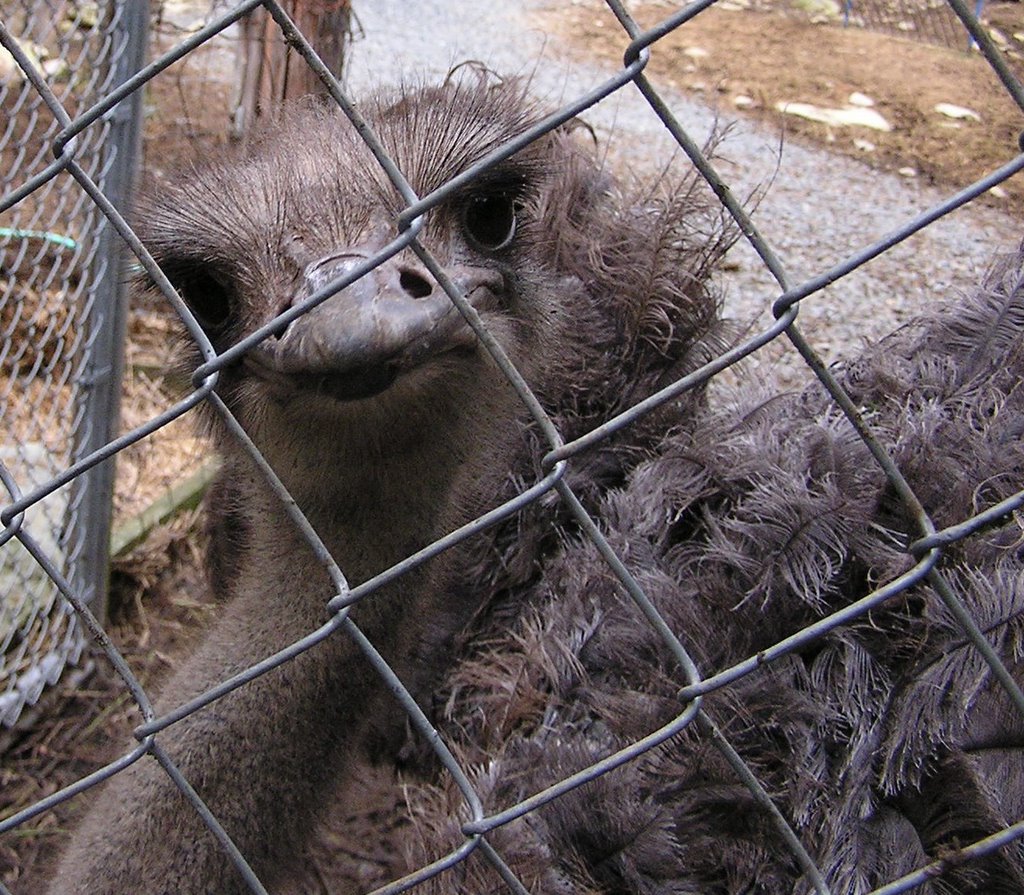
When chicks aren't around, the emus still the show. These giant gangly birds are very curious about their human visitors. About human height, they seem to want to dance with you from the other side of the chain link fence. They twist their necks around to get a closer view and beg for food.
About 40% of the birds here couldn't make it in the wild and so will live out their lives here.
Where to See Neat Animals in the Northeast
Subscribe to:
Posts (Atom)
