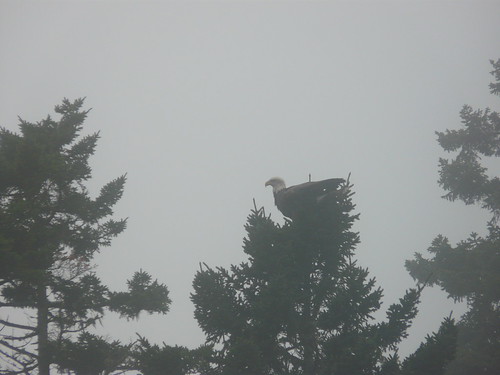
Winter bird and wildlife watching leans heavily on cold pushing animals into places they can eat or just keep warm. Eagles fly south to find unfrozen rivers. Manatees (and sometimes turtles) huddle around hot springs and power plants. This super harsh weather, then, is especially bountiful for wildlife watchers--as long as you're in an area just warm enough. That's why the south, despite cold weather, is having a great season for wildlife watching while northerners have to bear trifling numbers of animals.
The eagle-watching festivals going on around the country illustrate the trend. Anthony Lawrence, director of recreation at Kentucky Dam State Resort Park says the trees are practically dripping eagles. "They're landing two by two on the ice and basically ice fishing, which you never see," he says. Same deal over in Alabama. Patti Donnelan, naturalist at Lake Guntersville, says all the known nests are active. "It seem to be a good year," she says. Up north, it's a bit slower. They've seen fewer birds this year in Keokuk, Iowa. (Though, as the midwest's biggest concentration, they've got hundreds to spare.)
But it goes beyond eagles. Up in Canada the scarcity of birds showed up in the Christmas Bird Count. ""I had a total of 14 individual birds," one biologist told the CBC. "Normally I'd have a couple of thousand of birds by that time." Birders around Ottawa also blamed a cyclical lack of seeds.
So many factors go into how many birds are found in counts, it's hard to just blame a cold spell. Anecdotally, though, Tampa saw a big bird count. Loss of habitat pushed down migratory bird numbers on the east coast 12-18%. since the '60s. And around the world birders from India to Holland to Cornwall are contemplating the impact of climate change on bird appearances. Birds have adjusted their migration to warmer weather, but these freak cold snaps keep them on the move.
Where to See Animals Down South
Showing posts with label winter. Show all posts
Saturday, January 16, 2010
Wednesday, January 13, 2010
Enjoying Your Local Coyotes (or Coywolves)
My sister Mary Ann has been tracking these coyotes--really coywolfs--the longest. Like many animal-watchers, she gives them names based on their appearance or behavior, such as Fluffy, with the thick coat. Fluffy had pups this spring and in the fall a friend found the den in a thicket.
Last year I got Mary Ann a motion-activated camera designed for hunters, which she more or less ignored. Ok, she claims to have put it out but got nothing but raccoon pictures. We could see in the snow that two compost mounds were clearly high-value real estate in coyote-world. They had tons of tracks and pee. We set the camera there and got a picture the first night.
But without some knowledge of coyote world, we didn't know how to explain what was going on. That's where we really need Suburban Howls. Way does a great job of synthesizing the body of knowledge on eastern coyotes or coywolves and describing his own research and findings. We had theorized the coywolves liked the mounds either because the composting made them warm or because rodents lived inside. But Way describes how coyotes use little hills to keep a look-out.
My sister showed me the den, but we didn't see any tracks going in. Way explained that coyotes only use it for raising puppies. Otherwise they have rendezvous points, little meet-up spots, preferably in secluded woods.
One day we saw a coyote lying dead on a highway about 6 miles away. Our first hope was that it was too far for the family pack. But Way found coyotes his adult coyotes moved "at least 10 miles a night" and occasionally even 25 miles. But it turned out it probably wasn't one of the resident coyotes, or at least there were at least two left.
We got only tiny glimpses of our coyotes--either unsuccessfully looking for lunch on the frozen lake or sniffing around these mounds at night. But thanks to the book, we learned the basics of their family life, how pups either become helpers, staying around to raise the next litter; dispersers, taking off on their own; or "slouchers," those that stick around but don't help.
We're still learning about the local pack. After years of frustrating ignorance, Way gave us a hint of what's going on and a chance to see what it's like to track them seriously. He tells stories of tracking one coyote to near the Boston Garden and walking in on one that looked dead in winter snow, but turned out to be three canines sleeping on top of each other. He's also an inspiring advocate for people who just want to watch wild animals in a management geared almost exclusively towards hunters. I was going to give the book to my family to keep, but I like it so much I'm keeping it and getting them their own copy.
Tuesday, January 12, 2010
Iguanas Dropping, Manatees Gathering, Pythons Surviving in Florida's Cold
Florida's harsh cold spell is a bonanza for animal watchers, if not for the Florida animals themselves. Manatees are gathering around power plants and hot springs. Iguanas are dropping from trees in a kind of cold coma. Cold-stunned turtles are warming up in hotel rooms. Pythons are sunning themselves. And waterfowl are migrating down from other states, says Gary Morse, a spokesman for Florida's Fish and Wildlife Commission.
Manatees: The manatees are the ones wildlife officials are worried about. They're native, endangered and hate the cold. Sea cows need water at least 68 degrees to survive. Last year at least 56 died of cold stress, the FWC says. This year they'd like people to give them a break and back off for a bit. "They are stressed from the cold and from not eating. We advise people not to approach them in these times," Morse says. "Our mere presence as human beings can cause them to flee the very thing they need." The FWC already pulled two frigid manatees from cold water and sent to a zoo and an aquarium to warm up.
Sea Turtles: Sea Turtles often turn up at the same hot spots that draw manatees. But if they don't they become sluggish and eventually get cold-stunned and beach themselves. Rescuers are swooping in and taking them to the The Turtle Hospital on the Keys and the Georgia Sea Turtle Center have resorted to putting them up in hotel rooms and kiddie pools, respectively.
View AnimalTourism.com in Florida in a larger map View AnimalTourism.com Florida in full context
Florida wants to get rid of invasive species, especially those that were dumped into the wild as pets and pose a danger to the animals that are supposed to be there. People mostly agree--except when it comes to animals that are fun to watch. Wildlife populations are always moving and in flux, after all.
Iguanas: Florida has 48 invasive reptile species, mostly lizards. The Mexican spiny-tailed iguana can grow to four feet and has been around since 1978. The iguanas get cold and fall from trees. Some helpful Floridians take them inside to warm up--something wildlife officials frown on.
Pythons: Nobody likes pythons, which are overtaking the swamps by the thousands. Jenny Tinnell, FWC biologist, put out a statement encouraging hunting: "They may be out in the open more than before to find the warmth of the sun, and we hope hunters, in the normal course of hunting in these areas, will take advantage of the opportunity to help stop the spread of this nonnative species."
Birds: Birds that normally fly to Georgia, may have to fly to Miami to get the warmth they need this year. No one is sure what will happen to the resident monk parrots and parakeets that dot the state, either.
Where to see wildlife in Florida
Manatees: The manatees are the ones wildlife officials are worried about. They're native, endangered and hate the cold. Sea cows need water at least 68 degrees to survive. Last year at least 56 died of cold stress, the FWC says. This year they'd like people to give them a break and back off for a bit. "They are stressed from the cold and from not eating. We advise people not to approach them in these times," Morse says. "Our mere presence as human beings can cause them to flee the very thing they need." The FWC already pulled two frigid manatees from cold water and sent to a zoo and an aquarium to warm up.
Sea Turtles: Sea Turtles often turn up at the same hot spots that draw manatees. But if they don't they become sluggish and eventually get cold-stunned and beach themselves. Rescuers are swooping in and taking them to the The Turtle Hospital on the Keys and the Georgia Sea Turtle Center have resorted to putting them up in hotel rooms and kiddie pools, respectively.
View AnimalTourism.com in Florida in a larger map View AnimalTourism.com Florida in full context
Florida wants to get rid of invasive species, especially those that were dumped into the wild as pets and pose a danger to the animals that are supposed to be there. People mostly agree--except when it comes to animals that are fun to watch. Wildlife populations are always moving and in flux, after all.
Iguanas: Florida has 48 invasive reptile species, mostly lizards. The Mexican spiny-tailed iguana can grow to four feet and has been around since 1978. The iguanas get cold and fall from trees. Some helpful Floridians take them inside to warm up--something wildlife officials frown on.
Pythons: Nobody likes pythons, which are overtaking the swamps by the thousands. Jenny Tinnell, FWC biologist, put out a statement encouraging hunting: "They may be out in the open more than before to find the warmth of the sun, and we hope hunters, in the normal course of hunting in these areas, will take advantage of the opportunity to help stop the spread of this nonnative species."
Birds: Birds that normally fly to Georgia, may have to fly to Miami to get the warmth they need this year. No one is sure what will happen to the resident monk parrots and parakeets that dot the state, either.
Where to see wildlife in Florida
Tuesday, January 05, 2010
Eagle Season Begins in Illinois
When I grew up in Illinois, seeing a bald eagle would have been impossible or at least fantastic. On January 2, my family and I drove just two hours outside Chicago and got to see seven bald eagles fishing on the Illinois River by Starved Rock State Park. More regular guests, jaded by appearances of over 100 eagles, walked away disappointed. We couldn't have been more delighted.
Now Illinois brags that it has the most bald eagles of any (continential) state. Alaska blows everybody away with 50% of the world's population of 70,000, according to Bald Eagle Info. Haliaeetus leucocephalus only lives in North America and Ireland. The bird was upgraded from endangered to threatened in 1995, then totally bumped off the endangered species list in 2007, thanks largely to cracking down on poachers and DDT. The IUCN, which rates how vulnerable animals are, now dismissively says the bald eagle is of "least concern."
The Mississippi River is where most Illinois eagles hang out and where most eagle-watching hotspots are, but Starved Rock is by far the closest place to Chicagoland. The number of eagles that visit the area has been climbing steadily since people started counting 15 years ago and no one knows how high it might go. (The eagle population is thought to have once been 100,000.)
Kevin Eubank, the head ranger at the dam where you do most eagle viewing, says the numbers hit a peak last February with 115. They're coming down from Wisconsin and Canada, attracted by the open water the dam creates so they can fish. They strongly prefer fish, but Eubank says they've been seen eating roadkill deer, too. The jumping Asian carp are too big for them, he says. Which is a shame: how much would you like to see a bunch of eagles snatching invasive jumping fish from the water? During the day the eagles have a favorite tree on an island in the river, leading to some surreal photos of a tree full of eagles. At night they roost in the park's canyon's to get shelter from the wind.
"The colder the weather, the better," says Eubank. Well, then, it looks like it's going to be another great bald eagle season.
More places to see eagles
See more animals around Illinois and the Midwest
STARVED ROCK EAGLE OPTIONS:
OUTDOOR: You can see the eagles from Starved Rock itself, but that's up a lot of icy stairs outside. It's still worth it, though. An eagle cirlced right over us. From the visitor's center, you can walk out to the river on flat ground and see the eagles on their favorite tree.
INDOOR/OUTDOOR: You have indoor/outdoor options at both the park lodge or the closest and most ideal place, the Illinois Waterway Visitors Center, which has two stories of windows and outdoor decks. Don't go to the 1930s lodge first; with its fireplaces, 1930s log ceiling and Irish coffee, you'll never want to go out in the cold.
TROLLEY: The park runs a trolley tour a few days a week. The big appeal here is that you're in a heated box--though it was cancelled the day we went.
EAGLE WEEKEND: Thousands of people turn out for the runs Eagle Watch Weekend that IlIllinois Audubon runs. This year it's Jan. 23-24. TIP: you can see as many eagles and avoid the crowds if you go during the week in late January or early February.
Bonus species: Cooper's hawk, tons of migrating geese, deer
Bonus Goofy YouTube Video: Let the Eagle Sour
Now Illinois brags that it has the most bald eagles of any (continential) state. Alaska blows everybody away with 50% of the world's population of 70,000, according to Bald Eagle Info. Haliaeetus leucocephalus only lives in North America and Ireland. The bird was upgraded from endangered to threatened in 1995, then totally bumped off the endangered species list in 2007, thanks largely to cracking down on poachers and DDT. The IUCN, which rates how vulnerable animals are, now dismissively says the bald eagle is of "least concern."
The Mississippi River is where most Illinois eagles hang out and where most eagle-watching hotspots are, but Starved Rock is by far the closest place to Chicagoland. The number of eagles that visit the area has been climbing steadily since people started counting 15 years ago and no one knows how high it might go. (The eagle population is thought to have once been 100,000.)
Kevin Eubank, the head ranger at the dam where you do most eagle viewing, says the numbers hit a peak last February with 115. They're coming down from Wisconsin and Canada, attracted by the open water the dam creates so they can fish. They strongly prefer fish, but Eubank says they've been seen eating roadkill deer, too. The jumping Asian carp are too big for them, he says. Which is a shame: how much would you like to see a bunch of eagles snatching invasive jumping fish from the water? During the day the eagles have a favorite tree on an island in the river, leading to some surreal photos of a tree full of eagles. At night they roost in the park's canyon's to get shelter from the wind.
"The colder the weather, the better," says Eubank. Well, then, it looks like it's going to be another great bald eagle season.
More places to see eagles
See more animals around Illinois and the Midwest
STARVED ROCK EAGLE OPTIONS:
OUTDOOR: You can see the eagles from Starved Rock itself, but that's up a lot of icy stairs outside. It's still worth it, though. An eagle cirlced right over us. From the visitor's center, you can walk out to the river on flat ground and see the eagles on their favorite tree.
INDOOR/OUTDOOR: You have indoor/outdoor options at both the park lodge or the closest and most ideal place, the Illinois Waterway Visitors Center, which has two stories of windows and outdoor decks. Don't go to the 1930s lodge first; with its fireplaces, 1930s log ceiling and Irish coffee, you'll never want to go out in the cold.
TROLLEY: The park runs a trolley tour a few days a week. The big appeal here is that you're in a heated box--though it was cancelled the day we went.
EAGLE WEEKEND: Thousands of people turn out for the runs Eagle Watch Weekend that IlIllinois Audubon runs. This year it's Jan. 23-24. TIP: you can see as many eagles and avoid the crowds if you go during the week in late January or early February.
Bonus species: Cooper's hawk, tons of migrating geese, deer
Bonus Goofy YouTube Video: Let the Eagle Sour
Labels:
bald,
bird,
eagle,
endangered,
Haliaeetus,
IL,
leucocephalus,
prey,
winter
Wednesday, February 11, 2009
Now's The Time To Go See Eagles and Seals
Just because it's winter doesn't mean there aren't lots of animals to watch. Here's a list of places to watch bald eagles all around the country are having their eagle watch or eagle festivals. Eagles can either migrate or stay put. This time of year the birds that live up north come down for open waters to fish in. They especially like waters near power plants and dams. (I guess they don't have to migrate as far down south if they can find some artificially heated water.
Although I grew up in a time when any eagle sighting would have been spectacular, eagles are now getting much easier to see on just about any big river. The Eagle Fest last weekend offered heated tents and experts, but since Croton Point Park near the Metro-North train station is one of the best spots, you could go anytime in probably from probably January to March This last week was an eagle watching festival at Croton-on-Hudson, which is just an hour north of New York City. Bruce Yolton took spectacular pictures of eagles riding the ice flows. Another great local raptor photographer, Francois Portman, told me he went up recently but only saw birds flying in the air. So, as always it's hit and miss.
Last weekend I tried to go see the seals that come to Sandy Hook in the winter, but just missed them. A ranger told me they had been right on the sand at Beach B, but I found none. When I walked out a mini-pier near Fort Hancock I asked two photographers if they'd seen anything. "Just a seal," one said. Just? But I didn't see any. The ranger also said that they're often seen just on the island or ice off shore.
Labels:
bald eagle,
birding,
eagle festival,
seal,
wildlife watching,
winter
Wednesday, February 22, 2006
Princess the Crow Reigns Over Sharon, CT
Sharon Audubon Center, Sharon, CT
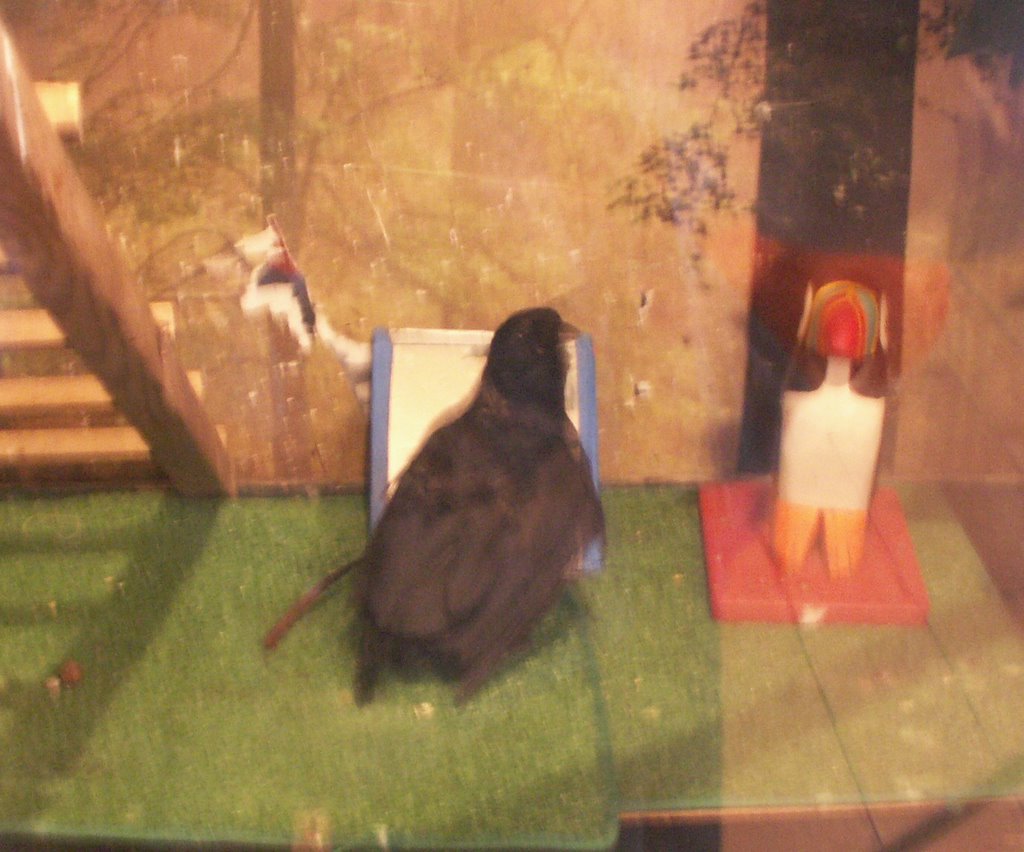
Princess the Crow lives inside at the Sharon Audubon Center. Her nest was in a tree that was cut down and she was found and raised by humans. She thinks she's human and if let out, she'll land on people, which can freak them out. So, she lives at the Audubon Center in glass house. They let her out before people arrive. When visitors come by her room, she bobs up and down with excitedment. We tried to tour the patsh and see the many other many birds who live here, but it was way too cold.


Where to See Neat Animals in the Northeast
Princess the Crow lives inside at the Sharon Audubon Center. Her nest was in a tree that was cut down and she was found and raised by humans. She thinks she's human and if let out, she'll land on people, which can freak them out. So, she lives at the Audubon Center in glass house. They let her out before people arrive. When visitors come by her room, she bobs up and down with excitedment. We tried to tour the patsh and see the many other many birds who live here, but it was way too cold.


Where to See Neat Animals in the Northeast
Subscribe to:
Posts (Atom)