We've Moved!

Hi and Welcome to the AnimalTourism.com blog. But we've moved just down the street to this site, animaltourism.com/news. Please comment there.
Showing posts with label audubon. Show all posts

Friday, February 12, 2010

Got 15 Minutes? Become a Citizen Scientist This Weekend

For four days starting Friday, anybody can be a birder and a citizen scientist. The Great Backyard Bird Count, now in its 13th year, is the first bird census of its size to have its tally be all online.

Unlike more hardcore events like the Christmast Bird Count, which requires all-day spotting, the GBBC is for all levels and you only have to commit to 15 minutes. You can bop around anywhere you want in the four days --February 12-25--and then submit your report online.

"It's a neat way of getting school and scout groups," involved, says Audubon's Geoff LeBaron, , [all] kids a way of get them going


Worried you won't know your birds well enough? They have some pointers on how to tell apart tricky pairs. To me, they look like those games where you try to tell one seemingly identical picture from another.


If you're competitive, check out their photo contest, which has several categories. I thought the "People Enjoying Birds" would be a lame one, but I was wrong. Check out last year's winner, Harry Mueller of Manitoba took an amazing shot of a woman pouring thistle into a feeder while four eager sparrows perched on her hat and mitten. Just shows how much fun you can have with even ordinary backyard birds.

Read More Bird Stories

Monday, February 01, 2010

Citizen Bird Counts Going Global -- Just as Warming Shifts Migrations

Americans are between bird counts, but this weekend the Brits worked on their big event, the Big Garden Birdwatch.  The bird counts are now spreading around the world--just in time to help capture how climate change is shifting birds' ranges and migration patterns.

Once written off as somewhat silly and "wobbly" data, citizen scientist data is are now being taken more seriously says Audubon's Geoff LeBaron, who runs the Christmas Bird Count, which was started by Audubon a century ago as an alternative to going bird hunting on the holiday.

"We could never afford to pay people to do that," LeBaron says. Now known by the trendy name crowd-sourcing, this data is free and vast. But wait, that's not all. The bonus is that it helps promote and prioritize conservation and creates bird advocates.


All of the surveys work differently and target different audiences. In terms of sheer data, the biggest is probably Christmas Bird Count: in the 109th count last year 59,000 birders tallied 66 million birds. But it's a long, cold day in the field and no place for kids.

That's where lighter events come in, like the Big Garden Birdwatch or the American Great Backyard Bird Count,  which starts here February 12. They're kind of a gateway drug that birders hope get students and dilettantes hooked. From the comfort of their homes, half a million Brits count for just an hour. Americans have to stay focused for just 15 minutes. (And if that's not convenient enough, you can do it during the year at eBird.)

This far-flung data net is catching amazing pattern changes. "A lot of birds nationwide have shifted their center of abundance northward and to some extent away from the coast," LeBaron says. The ocean tempers temperatures, so as the air warms up it becomes less necessary to stay by the coast.

Twenty years ago, biologists discounted anomalies of migrators staying put as bad birders getting identification wrong. But now birding is getting better and broader. Digital cameras have proved rarities. We're now sure that hummingbirds, for example, appear in the winters in the northeast. Still unanswered: the question of whether the nonconformist birds have always been here,  or whether they are moving in, due to either climate change or the welcome mat laid out by feeders.

What may be more important than whether bird counts spread east to west is whether they spread north to south, so that we get a whole picture of where birds go. Indeed, the counts are creeping southward. LeBaron is getting regular reports from Panama and more and more data from South America, especially the northern countries. Local groups are stepping up so that the data doesn't just count on an ambitious individual working in the region for a few years. Africa is also getting started with counts, like South Africa's map, which is hoping for the help of 500 spotters. As migration patterns change around the world, we'll all be there to witness it.

Sign up for the Great Backyard Bird Count

Where to See Eagles

Saturday, January 30, 2010

NYC Starts Watching for Seals on Coney Island

Unbeknownst to New Yorkers, seals have been hanging around the harbor for ages. For the first time the Parks Department is going to try to show them off a marine mammal tour of Coney Island today. (And next week there'll be a walk through Pelham Bay Park in the Bronx). If Parks is trying to convince New Yorkers seals are out there, it's a risky move: you can't be sure when they'll show up.

But the Coney Island walk is billed as marine mammals. The most likely sighting is a porpoise, says a ranger I talked to. For seals, we could see harbor, harp, gray  or even ring seals. There's also a chance of dolphins (common, white-sided) and whale (fin, minke or humpback). This season seals have been spotted in the Rockaways and the Bronx.

There are other, more reliable ways to see seals around New York City. Though I probably won't be able to resist the chance to look for them someplace a subway ride away.


  • CRESLI (Coastal Research and Education Center of Long Island) has seal walks and boat tours on Montauk and a neat map of where you might see seals around Long Island.
  • Seals also visit Sandy Hook in New Jersey from December to March.
  • New York City Audubon has a cruise by a bunch of island on a water taxi.
  • SKSA does kayak tours (wet or dry-suit required) on Long Island.

Where to See Seals

Wednesday, February 22, 2006

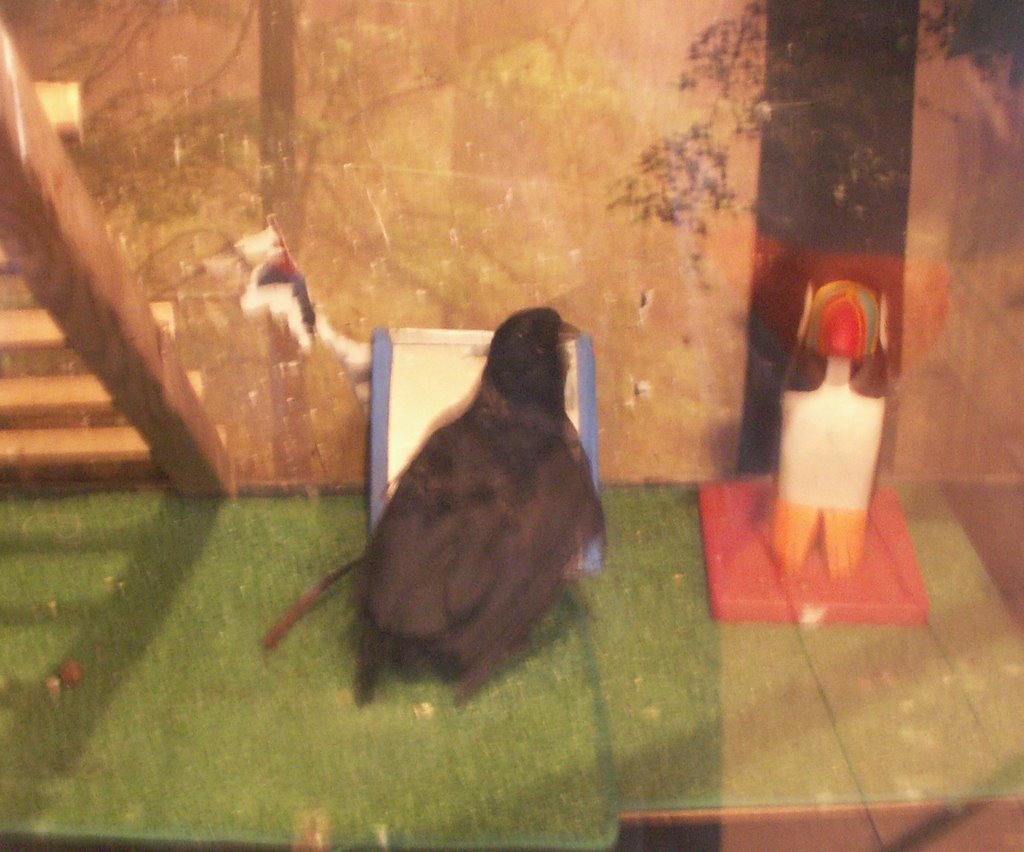
Princess the Crow Reigns Over Sharon, CT

Sharon Audubon Center, Sharon, CT
Princess the Crow lives inside at the Sharon Audubon Center. Her nest was in a tree that was cut down and she was found and raised by humans. She thinks she's human and if let out, she'll land on people, which can freak them out. So, she lives at the Audubon Center in glass house. They let her out before people arrive. When visitors come by her room, she bobs up and down with excitedment. We tried to tour the patsh and see the many other many birds who live here, but it was way too cold.


Where to See Neat Animals in the Northeast