We've Moved!

Hi and Welcome to the AnimalTourism.com blog. But we've moved just down the street to this site, animaltourism.com/news. Please comment there.
Showing posts with label IL. Show all posts

Friday, January 29, 2010

Hawk Hit By Plane Recovering From Burns

We're heard plenty about birds hitting planes since the USAIR crash into the Hudson last year. But what about birds hit by planes? An Illinois red-tailed hawk somehow got hit by a crashing private plane (or its fireball), caught fire and survived. Or at least that's the going theory of the Flint Creek Wildlife Rehabilitation Center, which took in the singed bird.

Tragically two men in their 30s died in the crash in Sugar Grove. But four people, including two kids, in a very close house survived.

Then rescuers found the bird with all its feathers burned off. They figure it's a red-tailed hawk--by far the most common hawk--and a female, the bigger of the species. But that's just a guess, the center's blog say:
Burned beyond positive species identification, Phoenix was recovered by Kane County Animal Control and was promptly transferred to Flint Creek Wildlife for emergency care. Since that time four nights ago, she has been receiving around-the-clock care for her injuries.

“When I saw the bird, I was shocked,” said Dawn Keller, the center's executive director.  “This was nothing like I’ve ever seen. It had to have been engulfed.” She only has down left and has burnt feet, throat and eyelids. Still the center will work to release her if she is able. Otherwise "Phoenix" will become an education bird.

Keller had to explain to the local media that Phoenix was not guilty of causing the crash. "The crash happened after dark, which means she was already sleeping for the night. If she got sucked into the propeller or engine, she'd be dead. She was just an innocent bystander...," Keller told the Beacon News.

Just last month the center rescued another raptor in a transportation-related mishap. A Ferruginous hawk (Buteo regalis)  rode thousands of miles on a freight train out of its range in western Canada before it was finally discovered stuck in the train's grill in Franklin Park, suburban Chicago.

Donate to Flint Creek
Where to see Hawks and Eagles

Sunday, January 24, 2010

Only 9 Eagles Show for Chicago's Closest Eagle Watch

Only about nine eagles were on hand for the 3,000 visitors who showed up for the closest eagle watch to Chicago, Eagle Watch Weekend at Starved Rock. Last year, 50 were there for the weekend and 115 spotted on the peak February day.

"I think most people got to see at least one eagle in the wild, which is better than seeing one on TV," said Kevin Eubank, the head ranger at the dam where you do most eagle viewing. Plus, they had a live bird of prey demonstration, so people got to see one up close, too. Edna Daugherty, who was driving the trolley for Starved Rock Lodge, said that eagles were out off and on all day.

eagle treeThe northern states have had slim eagle viewing this year. In 2009 the mid-winter Illinois eagle survey showed lousy results. First the cold weather seemed to drive birds further south. Now some rivers aren't frozen at all, meaning the raptors don't have to concentrate in one spot. The fish they like are in slim supply this year. And, on top of everything else, it's foggy. The local paper The News Tribune says presciently that eagle-watching has "never been much of an activity for serious birders." Maybe that's why it's so fun: It's relatively easy these days because eagle populations have recovered and the birds are big, obvious, and thrilling to watch. Six states have eagle watches this weekend: AL, IL, WA, MO, OK and TN.

If anything, I feel even better about my visit to the dam a few weeks ago, when we saw about seven birds. I think it should encourage people who maybe can't come out during the special events to try to see them another time.


Who celebrates Eagle Days: when and where

Wednesday, January 13, 2010

Enjoying Your Local Coyotes (or Coywolves)

stealth cam coyoteMy family in Illinois shares theories and gossip about the resident coyotes. Living in New York, I miss out. So I wanted to contribute to the family pastime when I visited over Christmas. The new tools this year: a game camera and Suburban Howls from John Way of the Eastern Coyote Research. The camera is great to see what's going on at night, but Way's book was exactly what we need to figure out what was going on.


My sister Mary Ann has been tracking these coyotes--really coywolfs--the longest. Like many animal-watchers, she gives them names based on their appearance or behavior, such as Fluffy, with the thick coat. Fluffy had pups this spring and in the fall a friend found the den in a thicket.

Last year I got Mary Ann a motion-activated camera designed for hunters, which she more or less ignored. Ok, she claims to have put it out but got nothing but raccoon pictures. We could see in the snow that two compost mounds were clearly high-value real estate in coyote-world. They had tons of tracks and pee. We set the camera there and got a picture the first night.

But without some knowledge of coyote world, we didn't know how to explain what was going on. That's where we really need Suburban Howls. Way does a great job of synthesizing the body of knowledge on eastern coyotes or coywolves and describing his own research and findings. We had theorized the coywolves liked the mounds either because the composting made them warm or because rodents lived inside. But Way describes how coyotes use little hills to keep a look-out.

My sister showed me the den, but we didn't see any tracks going in. Way explained that coyotes only use it for raising puppies. Otherwise they have rendezvous points, little meet-up spots, preferably in secluded woods.

coyote yawns on lake zurich
One day we saw a coyote lying dead on a highway about 6 miles away. Our first hope was that it was too far for the family pack. But Way found coyotes his adult coyotes moved "at least 10 miles a night" and occasionally even 25 miles.  But it turned out it probably wasn't one of the resident coyotes, or at least there were at least two left.

We got only tiny glimpses of our coyotes--either unsuccessfully looking for lunch on the frozen lake or sniffing around these mounds at night. But thanks to the book, we learned the basics of their family life, how pups either become helpers, staying around to raise the next litter; dispersers, taking off on their own; or "slouchers," those that stick around but don't help.

We're still learning about the local pack. After years of frustrating ignorance, Way gave us a hint of what's going on and a chance to see what it's like to track them seriously. He tells stories of tracking one coyote to near the Boston Garden and walking in on one that looked dead in winter snow, but turned out to be three canines sleeping on top of each other. He's also an inspiring advocate for people who just want to watch wild animals in a management geared almost exclusively towards hunters. I was going to give the book to my family to keep, but I like it so much I'm keeping it and getting them their own copy.

Read an interview with John Way

Tuesday, January 05, 2010

Eagle Season Begins in Illinois

When I grew up in Illinois, seeing a bald eagle would have been impossible or at least fantastic. On January 2, my family and I drove just two hours outside Chicago and got to see seven bald eagles fishing on the Illinois River by Starved Rock State Park. More regular guests, jaded by appearances of over 100 eagles, walked away disappointed. We couldn't have been more delighted.

Now Illinois brags that it has the most bald eagles of any (continential) state. Alaska blows everybody away with 50% of the world's population of 70,000, according to Bald Eagle InfoHaliaeetus leucocephalus only lives in North America and Ireland. The bird was upgraded from endangered to threatened in 1995, then totally bumped off the endangered species list in 2007, thanks largely to cracking down on poachers and DDT. The IUCN, which rates how vulnerable animals are, now dismissively says the bald eagle is of "least concern."

Starved Rock Bald Eagle
The Mississippi River is where most Illinois eagles hang out and where most eagle-watching hotspots are, but Starved Rock is by far the closest place to Chicagoland. The number of eagles that visit the area has been climbing steadily since people started counting 15 years ago and no one knows how high it might go. (The eagle population is thought to have once been 100,000.)

Kevin Eubank, the head ranger at the dam where you do most eagle viewing, says the numbers hit a peak last February with 115. They're coming down from Wisconsin and Canada, attracted by the open water the dam creates so they can fish. They strongly prefer fish, but Eubank says they've been seen eating roadkill deer, too. The jumping Asian carp are too big for them, he says. Which is a shame: how much would you like to see a bunch of eagles snatching invasive jumping fish from the water? During the day the eagles have a favorite tree on an island in the river, leading to some surreal photos of a tree full of eagles. At night they roost in the park's canyon's to get shelter from the wind.

"The colder the weather, the better," says Eubank. Well, then, it looks like it's going to be another great bald eagle season.

More places to see eagles
See more animals around Illinois and the Midwest

STARVED ROCK EAGLE OPTIONS:
OUTDOOR: You can see the eagles from Starved Rock itself, but that's up a lot of icy stairs outside. It's still worth it, though. An eagle cirlced right over us. From the visitor's center, you can walk out to the river on flat ground and see the eagles on their favorite tree.
INDOOR/OUTDOOR: You have indoor/outdoor options at both the park lodge or the closest and most ideal place, the Illinois Waterway Visitors Center, which has two stories of windows and outdoor decks. Don't go to the 1930s lodge first; with its fireplaces, 1930s log ceiling and Irish coffee, you'll never want to go out in the cold. 
TROLLEY: The park runs a trolley tour a few days a week. The big appeal here is that you're in a heated box--though it was cancelled the day we went.
EAGLE WEEKEND: Thousands of people turn out for the runs Eagle Watch Weekend that IlIllinois Audubon runs. This year it's Jan. 23-24. TIP: you can see as many eagles and avoid the crowds if you go during the week in late January or early February

Bonus species: Cooper's hawk, tons of migrating geese, deer
Bonus Goofy YouTube Video: Let the Eagle Sour

Monday, December 21, 2009

Get a Glimpse of Native Illinois Wildlife on their Winter Break--Join the Wildlife Prairie State Park

Just a couple hours west of Chicago a herd of bison is taking the winter off from delighting kids. Wildlife Prairie State Park--a unique combination of wildlife center, praire re-enactment and park--closes for the winter.

The animals in big herds, the elk and bison, are taken off public display to give their summer pastures a rest, says park spokesperson Kelly Stickelmaier. The enclosures (80 acres for the elk) are big enough to approximate a natural setting, but not so huge you can't see them. (Just check the park's very active flickr group and you can see how much of the animals visitors can see.)

The park's 18 bison are especially cooperative, coming up to the viewing stand, where they're fed at 1 o'clock.  "The elk are a little more persnickety, especially the boys," Stickelmaier says. Because the bison herd reproduces, the park sells off however many are born each year to keep the total at 18.

Badger at WPSP
Badger at WPSP,
originally uploaded by Mark Koonce.
I don't think I've seen another wildlife park that has badgers--and, believe me, I've looked. They've also have otters, eagles that came in through wildlife rehabilitation, skunks, bobcats and cougars.

Philantrhopist Will Rutherford started the park in 1978 mainly as a kind of rehab area for animals from the Brookfield Zoo. The park eventually shifted to native animals, then Rutherford gave the park to the state in 2000.

 Rutherford's family's Forest Park Foundation still supports the park, the Peoria Journal-Star says, but it can't make up for all the money now disgraced governor Rod Blagojevich cut from their budget. In one of his last acts, Blago used a line item veto to chop $828,000 from the Peoria park's $1.2 million budget, prompting worries it would close, according to Prairie State Outdoors. The park has come up with some creative ways to raise and save money to support their animals. You can still visit while the park is closed in winter if you become a member or rent a cottage. You can rent out a room for a business meeting or party--maybe even the one that looks out on the wolf pen. And they've even loaned out a couple bears. Certainly it's worth a visit and maybe a membership.


Join Wildlife Prairie State Park
Find other places to see wildlife in the Midwest with this AnimalTourism.com map
Where can I find the nearest buffalo herd?

Monday, January 05, 2009

Deer still exciting to some


When I was a kid, seeing deer was considered rare and lucky. Driving in the carpool to school in the morning, we'd look out over a field automatically, hoping for a glimpse. But the deer population has grown so much many people consider them a nuisance. They eat garden plants and get hit by cars, causing $1 billion in damages, according to the Institute for Highway Safety.

I've come close to hitting a couple myself driving on the Blue Ridge Parkway. But I am still excited to see them around.

This year for the first time ever my mom, who has been living in her house in Des Plaines, Illinois since the 1960s, had deer in her yard. It was a family, we think: a buck, a doe and two fawns. We figured we would never get deer because there's a big fence. They just jumped right over. They ate Rose of Sharon blossoms and corn and apples that are normally out for squirrels.

No matter how far you travel to see an unusual animal, there's always a unique pleasure of seeing a animal up close in a familiar setting.

Wednesday, January 04, 2006

Wolves and Bear Find Shelter with Chicagoland Biology Teacher


Big Run Wolf Ranch, Lockport, IL


Three species of wolves (British Columbian, Arctic and Grey Timber) interact intermingled in three different pens. Biology teacher Julie Basile and her husband John (who founded the ranch 18 years ago) track their interactions and move them to different groups when they see there's trouble coming, either in the form of too rough dominance fights or mating season.
Once secluded, the ranch is now crowded by houses and planned businesses. But the ranch is still growing. They visit schools or have nearby scouts and school groups come visit and learn about wolves. The wolves jump up and lick their caretakers.


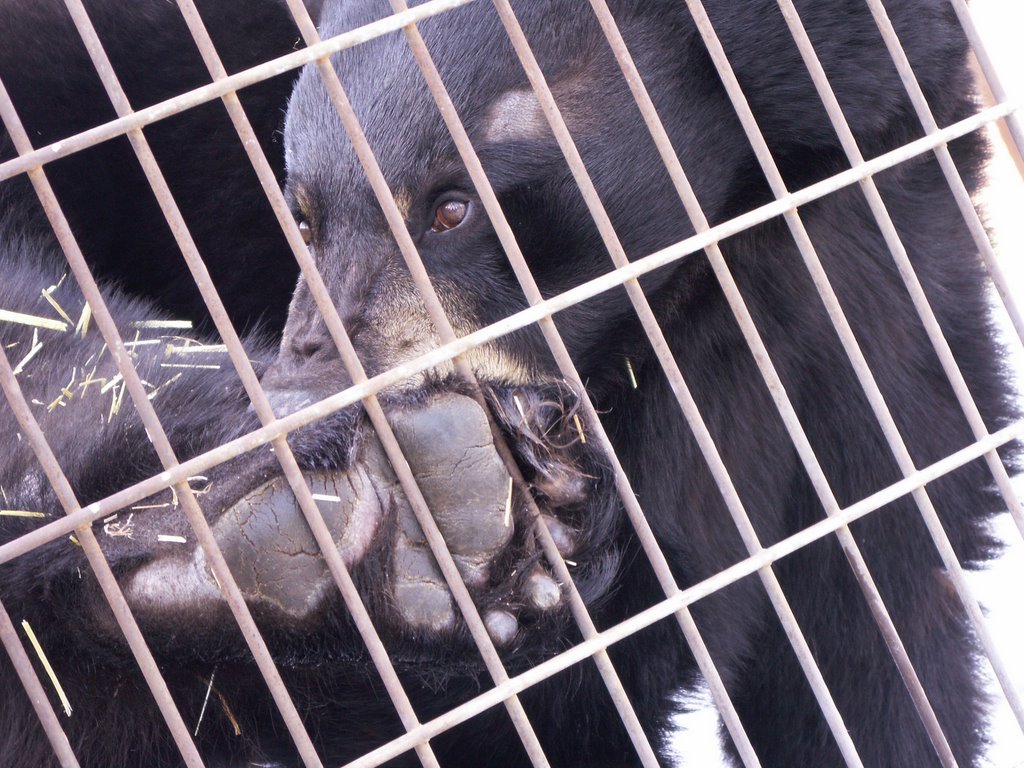
In addition to the wolves, the Basiles have taken in other animals that need help and a place to live. Wildlife officials came to John in 2000 with a 20 pound black bear cub that someone had bought at a flea market for $200 and tried to raise in an apartment until neighbors thought better of the idea. They would have euthanized the bear, now known as Kuma, that day, but the ranch took the bear in and built a proper enclosure, pool, shower and hibernation hut. Kuma likes to show off to crowds and wrestles with John.

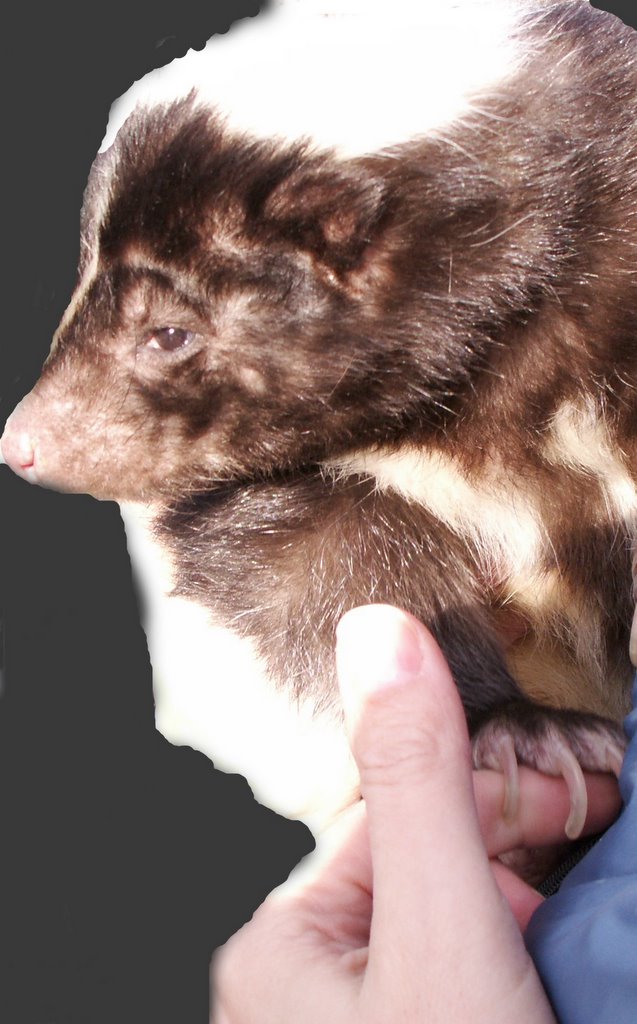
The ranch also has several shy coyotes, wild cats, horses, dogs, peacocks and a rescued descented skunk. Kirby looks different than a wild skunk because he's a domesticated variety and he smells different because he's been descented. He's friendly, cuddly and instintively holds a person's fingers with his claws like a baby does.

Where to See More Animals in the Midwest
Where Else Can I See Wolves?