We've Moved!

Hi and Welcome to the AnimalTourism.com blog. But we've moved just down the street to this site, animaltourism.com/news. Please comment there.
Showing posts with label buffalo. Show all posts

Wednesday, January 27, 2010

4 Budget Cuts that Save U.S. Taxpayers $280 Million AND Help the Environment, Animals and Wildlife Watchers

President Obama wants to freeze the tiny part of the federal budget that applies to programs in the environment, parks, education and transportation. I've seen this movie before and know this political gimmick doesn't have a happy ending for wildlife. But here are four easy way to cut the federal budget by $280 million a year and help the environment, wildlife and animal watchers.

Discount Grazing on Public Lands: $121 million
Wild Horse-Roundups and Permanent Holding:  $85 million a year
Killing Coyotes, Starlings and other "Bad" Animals: $71 million a year
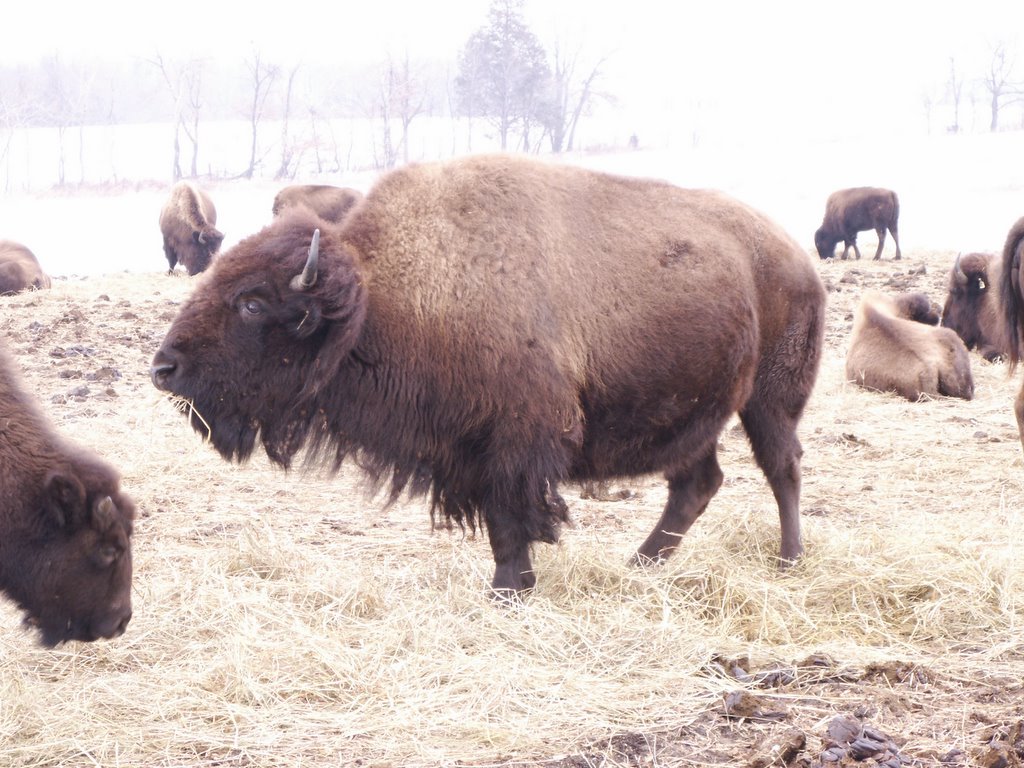
Rounding up Yellowstone Bison $3 million


1) Stop Cattlemen Welfare $121 million Cattlemen get to graze on federal land for about one-tenth the cost they would have to pay the private sector. This is a program both the left and right hate. The CATO Institute calls it "land-use socialism."
Cowboy on the Snow
Ranchers now pay about $1.35 per animal unit per month (AUM), compared to $13.50 in the real world. Just to break even the federal government should be charging between $7.64 and $12.26, a GAO report found. We could stop losing $121 million by charging market rates.
I'm a meat eater and amid the myriad choices of grass-fed and dry-aged, I've never gotten a special deal on federal land beef. If the massive federal lands were put on the free market, it would probably drive down costs for all ranchers--and consumers.
(Photo courtesy of Sharat Ganapati)


2) Stop rounding up wild horses : $85 million a year
We really have more wild horses in captivity that we know what to do with--about 33,000. The Bureau of Land Management started amassing mustangs under Bush, then proposed selling them to slaughter in 2005. The public was repulsed.
Each horse costs about $333 to round up (based on the $900,000 the BLM spent to catch 2,700 horses). Then it costs about $500 a year each to keep them.
But, we're still rounding up horses--another 12,000 this year. That will put nearly two-thirds of the wild horse population in federal custody at a cost of about $85 by 2012.


3) Stop Killing Coyotes and Starlings: $71 million a year
The federal government spent a stunning $71 million in FY2010 on the widely discredited science of killing 2.4 million predators and "nuisance" animals. The predators taken are quickly replaced by other animals moving into the territory. Wyoming spent $2.2 million federal tax dollars in 2007 to kill 11,000 coyotes, 300 foxes, 1,000 pigeons, 600 ravens and 55 wolves (among other animals they decided were bad).
Whether you think these animals should survive or not, you have to question whether federal tax dollars should be spent removing them.

The federal government also paid to dispatch (partial list)
1,177,00 starlings
335,000 cowbirds
90,000 coyotes
86,000 pigeons
16,000 cormorants
13,000 mourning doves
13,000 raccoons
6,000 squirrels
500 stray dogs
1,100 prairie dogs
1,110 feral cats
6,000 rabbits
876 robins (including 776 shot on purpose in Mississippi)
400 otters

344 wolves (including four critically endangered Mexican gray wolves that you are also paying the Fish and Wildlife Service to bring back)
336 cougars
84 mockingbirds
52 pelicans (including one brown pelican, then classified as endangered, intentionally shot in Florida)
43 Sandhill cranes
1 flamingo


4) Stop Rounding up Yellowstone Bison $3 million

Again, lay this one on the cattlemen. The various government agencies (parks, forest service, USDA) say they needs to limit bison because they might give a disease to 200 neighboring cattle.
"The U.S. government spends about $3 million a year to manage wild buffalo like livestock inside Yellowstone Park through its capture, quarantine, and vaccination program, all intended to prevent buffalo's natural migration to adjacent National Forest lands and on private lands where people want and respect them as wildlife," says Buffalo Field Campaign habitat coordinator Darrell Geist. He also points out that doesn't even count crop and livestock subsidies, giveaways to mining companies and gifts to
oil and gas interests. 

They could just stop giving out the money-losing grazing rights to the land in the valley. Remember, it's a money losing proposition anyway. But on top of that, we're paying to round them up and ship them off. Even though seeing bison is one of the reasons Americans like going to Yellowstone. BFC's. Habitat Coordinator Darrell Geist says they could probably buy out the cattle for about $1 million.


Where to Go to See Wolves
Places You Can See Bison

Monday, December 21, 2009

Get a Glimpse of Native Illinois Wildlife on their Winter Break--Join the Wildlife Prairie State Park

Just a couple hours west of Chicago a herd of bison is taking the winter off from delighting kids. Wildlife Prairie State Park--a unique combination of wildlife center, praire re-enactment and park--closes for the winter.

The animals in big herds, the elk and bison, are taken off public display to give their summer pastures a rest, says park spokesperson Kelly Stickelmaier. The enclosures (80 acres for the elk) are big enough to approximate a natural setting, but not so huge you can't see them. (Just check the park's very active flickr group and you can see how much of the animals visitors can see.)

The park's 18 bison are especially cooperative, coming up to the viewing stand, where they're fed at 1 o'clock.  "The elk are a little more persnickety, especially the boys," Stickelmaier says. Because the bison herd reproduces, the park sells off however many are born each year to keep the total at 18.

Badger at WPSP
Badger at WPSP,
originally uploaded by Mark Koonce.
I don't think I've seen another wildlife park that has badgers--and, believe me, I've looked. They've also have otters, eagles that came in through wildlife rehabilitation, skunks, bobcats and cougars.

Philantrhopist Will Rutherford started the park in 1978 mainly as a kind of rehab area for animals from the Brookfield Zoo. The park eventually shifted to native animals, then Rutherford gave the park to the state in 2000.

 Rutherford's family's Forest Park Foundation still supports the park, the Peoria Journal-Star says, but it can't make up for all the money now disgraced governor Rod Blagojevich cut from their budget. In one of his last acts, Blago used a line item veto to chop $828,000 from the Peoria park's $1.2 million budget, prompting worries it would close, according to Prairie State Outdoors. The park has come up with some creative ways to raise and save money to support their animals. You can still visit while the park is closed in winter if you become a member or rent a cottage. You can rent out a room for a business meeting or party--maybe even the one that looks out on the wolf pen. And they've even loaned out a couple bears. Certainly it's worth a visit and maybe a membership.


Join Wildlife Prairie State Park
Find other places to see wildlife in the Midwest with this AnimalTourism.com map
Where can I find the nearest buffalo herd?

Tuesday, January 03, 2006

Visit the Bison off Route 80

Wild Winds Buffalo Ranch, Fremont, Ind.

On our way to Illinois for Christmas, David and I stopped at the Wild Winds Buffalo Ranch, which is off Route 80 in Indiana, just a few miles from the Ohio border. We arrived on Christmas Eve. The guide, Three Paws, let Jolly come into the lodge, where he cooked us buffalo burgers for lunch. He explained that the ranch was started by a doctor who wanted to see the buffalo preserved and eventually opened it up to the public. David and Jolly stayed back (dogs spook buffalo), while I got to drive out to the herd with Three Paws. They keep the buffalo wild, don't touch them. A grandmother runs the herd and decides when they are through with the pasture they're in. She signals the humans by standing apart (in the wild she'd be off exploring), then she charges in alone to the new pasture (in the wild, she'd be looking for predators).
The ranch takes to heart the native America spiritual beliefs about the buffalo. A local tribe blessed the ranch and it's the site of primitive camps and gatherings for descendants of Native Americans. The grandma buffalo will decide when her time has come by separating herself from the herd. In the wild, she'd be taken by predators. Here she is taken by the humans, who then honor her by posting her skull in this display.

Where to See Animals in the Midwest
Where Can I See a Bison Herd Near Where I Live?