To animal tourists, Yellowstone National Park is Mecca, with a Broadway show that also somehow includes the the U.S. Capitol. You have to go once; it's spectacular, important, historical. But most Americans don't ever get to go. If you do go, chances are you can't stay as long as you'd like. So, even though it's a wildlife wonderland, you may want to hire a guide so you don't miss out.
Normally animaltourism.com focuses on seeing animals close to where people live in cities and suburbs. Anybody can tell you there are a lot of bears in Alaska or Wyoming. (And too many guide books give that kind of impractical and expensive advice.) But since my husband and I are planning a trip to Yellowstone, I'm checking out all the options there and assembling a guide to the guides.
These guides are expensive. But these are the people that know Yellowstone wildlife intimately, professionally and may be able to save you from an afternoon hoping for a bear jam. If you're only traveling with a couple people, the science centers seem ideal. The private tours are generally priced for groups of four to six, making them two to three times more expensive for couples. I'm sure this chart will grow and I'd like to focus on each in depth.
Check out the chart of Yellowstone Guides
Showing posts with label moose. Show all posts
Tuesday, March 30, 2010
Sunday, March 21, 2010
Antlering: Hunters and Wildlife Watchers Both Love Collecting Antlers
You can congratulate me now: I just received an antlering permit from Utah after passing the 2010 Antler Gathering Ethics Course. I only got 95%, but they let me redo the question I missed. As gathering antlers shed in the winter by moose, elk and deer gets more popular among both hunters and wildife watchers, states are regulating the hobby so we don't stress out the ungulates when they're practically starving. It's gotten so bad, even libertarian Wyoming has rules this year.
Utah's online "class" is really to teach you not to follow or harass the animals. They don't want people stalking deer and elk in the winter and spring, when they could be stressed and starving. Even in a good year 40% of yearling deer and 20% of adults die, I learned. The stress of winter--low food, temperatures and light--can kill them off even into the spring. Expending energy to run away from somebody looking for antlers is the last thing they need. In a podcast, Anis Aoude, Utah's Big Game Coordinator, says he's caught people chasing animals around, waiting for their antlers.
The various species can loose antlers November through March. Aoude says shedding the antlers every year might help the animals survive because predators know that males are weak after the rut. The Utah rules say you have to have a permit to hunt for antlers in the spring; Wyoming, home of the National Elk Refuge, just bans horn hunters from December through April. If you don't manage to gather any for yourself, the Boy scouts will still gather antlers for Jackson Hole's annual antler auction and Elk Fest in May.
Utah's online "class" is really to teach you not to follow or harass the animals. They don't want people stalking deer and elk in the winter and spring, when they could be stressed and starving. Even in a good year 40% of yearling deer and 20% of adults die, I learned. The stress of winter--low food, temperatures and light--can kill them off even into the spring. Expending energy to run away from somebody looking for antlers is the last thing they need. In a podcast, Anis Aoude, Utah's Big Game Coordinator, says he's caught people chasing animals around, waiting for their antlers.
The various species can loose antlers November through March. Aoude says shedding the antlers every year might help the animals survive because predators know that males are weak after the rut. The Utah rules say you have to have a permit to hunt for antlers in the spring; Wyoming, home of the National Elk Refuge, just bans horn hunters from December through April. If you don't manage to gather any for yourself, the Boy scouts will still gather antlers for Jackson Hole's annual antler auction and Elk Fest in May.
Where to Go to See Elk and Deer
See More Wild Animals Out WestFriday, July 10, 2009
Moose Alley, NH Tips: 10 Things Locals Won't Tell You
Believe the name. When you visit Moose Alley, New Hampshire,
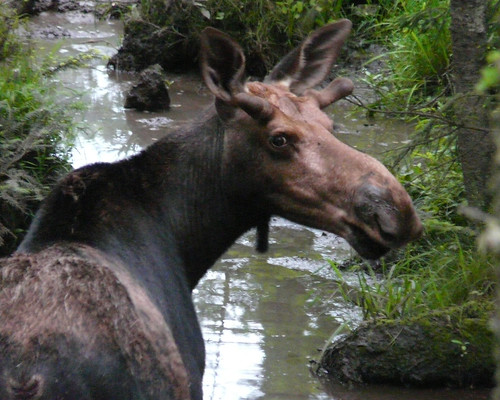
(not an actual town, but Route 3 north of Pittsburg up to the Canadian border) you will see moose. It's like magic; you just always see moose. I was skeptical, too--the victim of too many parks boasting of animals I would never see. But Moose Alley, way up in Coos County, has never failed me.
I kept asking the locals for moose-watching tips--since moose follow routines. Usually I got nowhere with that line of questioning--lots of encouragement to look "anywhere," "any road" at "any time." So I came up with what I would tell a friend visiting Moose Alley.
1. Look for Roadside Wallows.
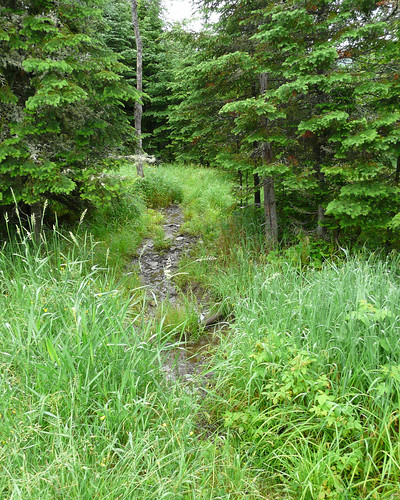
Moose hang out by the side of the road to drink from ponds and puddles with salt run-off. You can spot the wallows because they tend to have trampled mud around them and a moose trail leading away from the road.

2. Look for Roadside Parking.
Where there are established wallows there is effectively wallow parking. Moose return at the same time every day. Moose watchers follow. One particularly popular wallow has a lot next to it--and still gets an overflow crowd parking on Route 3 at dusk. For that matter if you see a roadside parked car, as you will quickly figure out, it's probably your fellow moose watcher. Just ask if they've actually seen a moose there and are not just acting on a hunch that "that looks like a perfect place for a moose"--a phrase you will find yourself using repeatedly.
3. Moose also like recently cut trees.
Georgie Lyons told me that a logger off Route 26 says that a dozen moose appear in the morning when they hear him start his chainsaw. (She's in the visitor's center near Colebrook, but in the Chamber of Commerce back office. She knows everything about the area and is happy to share it.)
4. Timing matters, but not completely.
You will be exhorted to Go at Dusk and Dawn. Moose are crepuscular--meaning most active then. I've had the best luck seeing them in the hour right before dark. But they're also really active at night. A truck driver reports he recently saw 27 moose (not all at once) along a nearby road at 2 a.m. The problem with this--as with dusk--is that if you get any picture, it'll be lousy. And for that matter, you may see them during the day, too. Locals stress that they see them all times of day. I had my best sighting at 10 am. Moose's Hours Inconvenient? Go Anytime.
5. Route 3 is the best, but any area road will do.
The heart of Moose Alley is Route 3, but Routes 145, 26 and 16 all are local hotspots. So are the logging roads off Route 3, especially one marked Gate 137. For that matter, the people I talked to just said to drive any local road, especially ones bordering wilderness. The thoughtfully-built official viewing area on 26 hasn't had moose in a while, locals say. (We rented a house at a delightful Poodle Farm in Colebrook, a good mid-point.)
6. Lurk.
Once you find a moose spot, come back at the same time tomorrow. And if the moose get spooked by watchers, just sit and wait. You'll have the moose all to yourself.
7. You may not see any antlers.
First off, you're going to see more cows than bulls because the bulls are more wary. Second, the antlers fall off after the fall mating season, then resprout in early summer.
8. Your moose call is only going to work in mating season.
Moose don't just call each other to figure out where everyone's at--like some species do. They only call in season. Experienced moose hunters say it really works--and may even work a month or so after the season because some females may be late. But moose hunting seasons are timed to coincide with the rut. So you may just draw in hunters. And the moose catch on pretty quickly to the hunt and become much more cautious about people, hunting guide Larry Adair told me last year.
9. The logging drivers hate you.
They're trying to work and here we are trolling around for moose, half stopping. If you go on the logging roads, you have to be ready to get out of their way. They show their annoyance by driving fast past you.
10. The moose aren't that fond of you, either. And they really hate your dog.
Moose will run off if you get too close--or they may warn you off, but the signs may be too subtle: they raise the hackles on their rump, point ears back and lip their lips. Also, they give you a dirty look. They can bluff charge, charge for real and go out of their way to kick a dog. You car is actually a pretty good wildlife blind, especially if you've got a sun roof. Though when there's a Moose Jam, families will get out. You'll feel like a chump staying in your car. But the moose will eventually get spooked by people on foot.
For all that, it's still a thrill to get to watch one of these giant animals eat. I've been trolling likely looking bogs throughout New England and the Maritimes and Moose Alley is about the easiest place to do it.
I kept asking the locals for moose-watching tips--since moose follow routines. Usually I got nowhere with that line of questioning--lots of encouragement to look "anywhere," "any road" at "any time." So I came up with what I would tell a friend visiting Moose Alley.
1. Look for Roadside Wallows.
Moose hang out by the side of the road to drink from ponds and puddles with salt run-off. You can spot the wallows because they tend to have trampled mud around them and a moose trail leading away from the road.
2. Look for Roadside Parking.
Where there are established wallows there is effectively wallow parking. Moose return at the same time every day. Moose watchers follow. One particularly popular wallow has a lot next to it--and still gets an overflow crowd parking on Route 3 at dusk. For that matter if you see a roadside parked car, as you will quickly figure out, it's probably your fellow moose watcher. Just ask if they've actually seen a moose there and are not just acting on a hunch that "that looks like a perfect place for a moose"--a phrase you will find yourself using repeatedly.
3. Moose also like recently cut trees.
Georgie Lyons told me that a logger off Route 26 says that a dozen moose appear in the morning when they hear him start his chainsaw. (She's in the visitor's center near Colebrook, but in the Chamber of Commerce back office. She knows everything about the area and is happy to share it.)
4. Timing matters, but not completely.
You will be exhorted to Go at Dusk and Dawn. Moose are crepuscular--meaning most active then. I've had the best luck seeing them in the hour right before dark. But they're also really active at night. A truck driver reports he recently saw 27 moose (not all at once) along a nearby road at 2 a.m. The problem with this--as with dusk--is that if you get any picture, it'll be lousy. And for that matter, you may see them during the day, too. Locals stress that they see them all times of day. I had my best sighting at 10 am. Moose's Hours Inconvenient? Go Anytime.
5. Route 3 is the best, but any area road will do.
The heart of Moose Alley is Route 3, but Routes 145, 26 and 16 all are local hotspots. So are the logging roads off Route 3, especially one marked Gate 137. For that matter, the people I talked to just said to drive any local road, especially ones bordering wilderness. The thoughtfully-built official viewing area on 26 hasn't had moose in a while, locals say. (We rented a house at a delightful Poodle Farm in Colebrook, a good mid-point.)
6. Lurk.
Once you find a moose spot, come back at the same time tomorrow. And if the moose get spooked by watchers, just sit and wait. You'll have the moose all to yourself.
7. You may not see any antlers.
First off, you're going to see more cows than bulls because the bulls are more wary. Second, the antlers fall off after the fall mating season, then resprout in early summer.
8. Your moose call is only going to work in mating season.
Moose don't just call each other to figure out where everyone's at--like some species do. They only call in season. Experienced moose hunters say it really works--and may even work a month or so after the season because some females may be late. But moose hunting seasons are timed to coincide with the rut. So you may just draw in hunters. And the moose catch on pretty quickly to the hunt and become much more cautious about people, hunting guide Larry Adair told me last year.
9. The logging drivers hate you.
They're trying to work and here we are trolling around for moose, half stopping. If you go on the logging roads, you have to be ready to get out of their way. They show their annoyance by driving fast past you.
10. The moose aren't that fond of you, either. And they really hate your dog.
Moose will run off if you get too close--or they may warn you off, but the signs may be too subtle: they raise the hackles on their rump, point ears back and lip their lips. Also, they give you a dirty look. They can bluff charge, charge for real and go out of their way to kick a dog. You car is actually a pretty good wildlife blind, especially if you've got a sun roof. Though when there's a Moose Jam, families will get out. You'll feel like a chump staying in your car. But the moose will eventually get spooked by people on foot.
For all that, it's still a thrill to get to watch one of these giant animals eat. I've been trolling likely looking bogs throughout New England and the Maritimes and Moose Alley is about the easiest place to do it.
Labels:
Alces alces,
moose,
moose alley,
NH,
tour,
wildlife,
wildlife watching
Monday, January 19, 2009
Moose moving to new herds
In the last couple weeks we've seen a lot of helicopter rides for the moose around Ogden, Utah.
Nineteen moose that had been wandering into the city were moved to the Upper White River/Flat Tops area, according to the Daily Sentinel. There are moose there, but not a lot. They travelled by helicopter sling and livestock trailer to the North and South forks of the White River and along Marvine Creek.
Another 20 moved to Colorado, according to the Deseret News. Last year wildlife officials got 60 calls about moose around.
Instead of using drug darts, the helicopter crews shoot a net over the moose, handcuff their hooves, blindfold them to keep them calm, then get a dozen men to carry them to a trailer.
Colorado used to trade bighorn sheep for the moose; now they just pay for them. The Craig Daily Press quotes Colorado Wildlife officials saying there probably weren't moose here originally; they just wanted them to attract tourists.
I don't know if responding to complaints of just seeing moose is all that sound of a management plan. Or bringing in a new species for a tourist attraction. In fact, I'm pretty sure neither is. But I'm glad the moose are going somewhere that somebody isn't going to call the cops just for seeing them. And I do think they'll be something tourists want to see.
Nineteen moose that had been wandering into the city were moved to the Upper White River/Flat Tops area, according to the Daily Sentinel. There are moose there, but not a lot. They travelled by helicopter sling and livestock trailer to the North and South forks of the White River and along Marvine Creek.
Another 20 moved to Colorado, according to the Deseret News. Last year wildlife officials got 60 calls about moose around.
Instead of using drug darts, the helicopter crews shoot a net over the moose, handcuff their hooves, blindfold them to keep them calm, then get a dozen men to carry them to a trailer.
Colorado used to trade bighorn sheep for the moose; now they just pay for them. The Craig Daily Press quotes Colorado Wildlife officials saying there probably weren't moose here originally; they just wanted them to attract tourists.
I don't know if responding to complaints of just seeing moose is all that sound of a management plan. Or bringing in a new species for a tourist attraction. In fact, I'm pretty sure neither is. But I'm glad the moose are going somewhere that somebody isn't going to call the cops just for seeing them. And I do think they'll be something tourists want to see.
Labels:
co,
moose,
ut,
wildlife management
Sunday, September 21, 2008
New Brunswick Moose Cruise
I've heard about going with hunting guides on wildlife watching tours, but never done it. A guy I know who gives bear viewing (and not hunting) tours says the hunters mock the watchers. But the wildlife watching business isn't nearly as developed as the hunting guide one. So where do you go if you want someone that really knows animals?
Staying in Fundy National Park I saw a brochure for nearby Adair's Wilderness Lodge and their "wildlife tours." Another couple in the park said everyone who went there loved it. I called and talked to Ida Adair, who said we might see deer or moose, but nothing's guaranteed. Wildlife watchers know that's part of the deal. The only ones who say you're going to see an animal for sure either are lying or have some place staked out where habituated animals visit regular. The Adairs are neither. Also, they said taking our dog was fine. Larry Adair takes his shepherd with on trips, too.
We cruised around in Larry's white van, pounding over dusty clay roads, looking in every field. A good part of the fun of the trip with Larry Adair is hearing his stories about his past adventures in the wild, with animals and with people. He may have been holding back any hunting stories that would've turned me off, but I think of him more as an enthusiastic outdoorsman. When I took a class for a hunting license for research, the instructor talked about the true sportsmen, who didn't care whether they actually killed any animals, just about whether they had a good time with friends and helped others enjoy the wilderness. That's Larry.
When I mentioned how some people in the states now get annoyed at seeing deer (which are still relatively rare in these parts), he responded "There's nothing more exciting than seeing a wild animal."
And we did get to see two moose cows. One, off in a field in the perfect sunset glow. The other was there when we looped back. Larry told me I could get in closer, just move when the moose's head was down. Smart tip.
Larry mentioned that a big hunk of land near him might become part of Fundy National Park. When people asked him whether that would put him out of business, he said, no, he can make money teaching people how to hunt, with a gun or with a camera.
Ida, who made the pumpkin pie we had for dinner, also had neat stories about wildlife, like seeing the migration of nighthawks.
We also really appreciated the more laid back attitude in general in Canada about travelling with dogs. Originally for this fall trip David and I planned on going to Maine and maybe see some moose in the rut. But, we're travelling with our old dog Jolly. He's nearly 15 and we don't know if this will be his last adventure.
But Maine wasn't so accommodating. Baxter State Park doesn't allow dogs. A moose tour out of Millinocket doesn't either. David would've been content to stay behind but they didn't even allow dogs in the cottage. So, we decided to head to New Brunswick, figuring it would be just like Maine, only more so.
We're definitely tempted to come back to Adair's in a bit. Larry says right after the 3-day moose hunt this week will be the rut. And then he'll be able to call in a bull moose.
Where to See More Moose
See More Wildlilfe in Canada
Tuesday, August 12, 2008
Moose in the Adirondacks: Coming Soon
When I went up to the Adirondacks recently I was hoping to see a moose. I should have been tipped off by the fact that the New York Department of Transportation still wants everyone to tell them whenever they see a moose that this wasn't going
to be easy. We stayed in Indian Lake, the self-proclaimed moose capitol of New York.
The Snowy Mountain Inn is keeping track of moose sightings for locals, especialy those around Indian Lake. When we stayed there we didn't see any moose, moose tracks or even moose scat. The woman whose cottage we rented said a moose had been on her property this summer, but all she got to see was the tracks.
Now dogs that are specially trained to sniff out moose droppings are on the case, trying to get an accurate count of moose in the area. Nobody knows how many moose the park or state have, except to say that it's in the hundreds and growing. That's great news from just 20 years ago when the state figured it had only 15 moose.
I'd love to see New Yorkers catch onto what Maine, New Hampshire and Vermont offer: guided tours to go out and see moose at dusk.
Where to See Moose
See More Animals in the Northeast
to be easy. We stayed in Indian Lake, the self-proclaimed moose capitol of New York.The Snowy Mountain Inn is keeping track of moose sightings for locals, especialy those around Indian Lake. When we stayed there we didn't see any moose, moose tracks or even moose scat. The woman whose cottage we rented said a moose had been on her property this summer, but all she got to see was the tracks.
Now dogs that are specially trained to sniff out moose droppings are on the case, trying to get an accurate count of moose in the area. Nobody knows how many moose the park or state have, except to say that it's in the hundreds and growing. That's great news from just 20 years ago when the state figured it had only 15 moose.
I'd love to see New Yorkers catch onto what Maine, New Hampshire and Vermont offer: guided tours to go out and see moose at dusk.
Where to See Moose
See More Animals in the Northeast
Labels:
adirondacks,
moose,
ny
Subscribe to:
Posts (Atom)