
This is just the sort of video that the folks at NOAA, who enforce the Marine Mammal Protection Act, don't want you to see. Here's a woman snuggling with an elephant seal, who is clearly nuzzling back. She's off on the remote South Georgia Island (where Shackleton sought rescue), between Argentina and Antarctica.
These uninhabited island have become like little Galapagos, with animals that are now not so scared of people. (They probably were more wary when it was the base for seal-hunting and whaling operations). Wildlife officials always remind you that seals will bite.
The woman seems to follow the standard procedure for interacting with most wild animals: sit still and wait for the animal to come to you. The seal keeps sniffing her face and even climbs over her. (And, no, he didn't have designs on her; elephant seal mating is much more violent.)
One guide near Canterbury, England, Wildlife Sailing, even offers a tour to a sandbank where you can swim with seals. "No need to swim to them they swim to us!" they say. Who knows what seals would do with human visitors if hunting them stopped completely?
Showing posts with label seal. Show all posts
Showing posts with label seal. Show all posts
Sunday, February 14, 2010


Thursday, February 11, 2010
Jersey Town Illegally Pushes Tired, Lost Seal Into Wrong Body of Water

A snow plow driver found a seal wandering in Woodbridge.
Photo credit: Woodbridge Township
The Marine Mammal Protection Act bans anybody without proper training from handling seals. Town workers used what NJ.com describes as "a mouthpiece normally used to capture dogs." I'm pretty sure what they're talking about is a noose pole, which could hurt the seal.
The right response would have been to call the Marine Mammal Stranding Center (609) 266-0538 (or, if you are in another state, another agency that's part of the Marine Mammal Stranding Network). They would have come right away to assess the seal, Dean says.
"Because this animal is so far inland, we would have taken him and released him somewhere else," Dean says. "He's just a little bit lost and confused and really looking for a spot to rest."
The location is about two miles up the Woodbridge River from the Arthur Kill, the waterway that separates New Jersey from Staten Island. Trained rescuers would have driven him there (about a mile by car.) Now no one knows where he is.
After swimming all the way from the arctic they like to lay out in the sun and build up their oxygen levels. Not every seal you see on the beach in New Jersey needs your assistance, she says. The area is getting more seals in the winter, so people are going to have to learn to accept them and stop trying to haul them. Two colonies live off the Jersey shore in the winter, one visible from Sandy Hook.
Dean says seals also don't like people trying to feed them. She's gone on beaches and found inappropriate gifts like cat food and sushi deposited around seals. When a seal hauled out at Penn's Landing people bought the befuddled seal expensive sushi at a nearby restaurant, she said. "There was sushi and stuff all over the whole deck." They only like live food, but that doesn't mean you should supply it.
"If you throw a fish at a seal he's going to run away," says Dean. "He doesn't know what you're doing."

Found a NJ Seal? Call the Marine Mammal Stranding Center (609) 266-0538
Want to See a Seal? Check out AnimalTourism Map
- CRESLI (Coastal Research and Education Center of Long Island) has seal walks and boat tours on Montauk and a neat map of where you might see seals around Long Island.
- Seals also visit Sandy Hook in New Jersey from December to March.
- New York City Audubon has a cruise by a bunch of island on a water taxi.
- SKSA does kayak tours (wet or dry-suit required) on Long Island.
Thursday, February 04, 2010
Harp Seal Stuck On Cliff Near Salem, MA, Rescued

The New England Aquarium Marine Animal Rescue Team and an alert seal-loving Beverly, MA, woman saved a harp seal who got stuck in the crevice of a cliff Monday. The 50-pound, yearling female seal got stuck between rocks 20 feet above the water by the full moon high tide. Rescuers extricated the seal, who has gray mottled fur, from the rocks, checked her out and released her into Salem Sound.
The seal was first seen on the cliff Sunday by neighbor Katie Duffy. Like many people, Duffy was worried seeing a seal out of water. She called rescuers who could thought the seal was doing fine. The seal population in the U.S. seems to be on the rise, leading to seals showing up in unusual places or high numbers. Just days ago the aquarium was checking out a seal who decided to visit downtown Boston.
The next day, however, the seal has gotten herself stuck in a tiny 2-foot deep trench. Duffey again called rescuers, who came out to find the seal "in significant distress with labored breathing," according to the Aquarium. "They were initially not optimistic about the seal’s prospects." Aquarium staff Adam Kennedy and Ulrika Malone threw a blanket over her. She froze in fear and they were able to push her into a crate. When they finally got to examine her, they found she was fine. She just had some scratches.
So they carried her crate down to a beach. At first she was still too scared to move, but she got the idea and swam out while all her rescuers looked on happily.
Sunday, January 31, 2010
Coney Island Marine Mammal Tour Yields Only Polar Bears
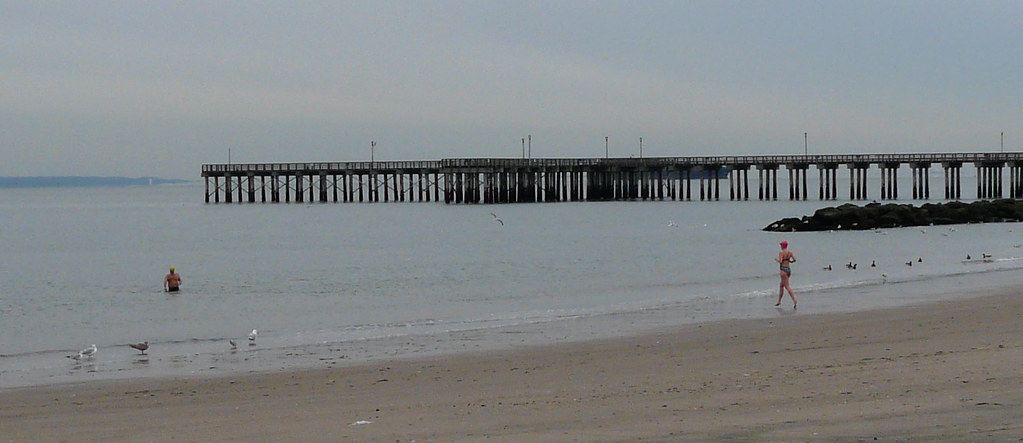
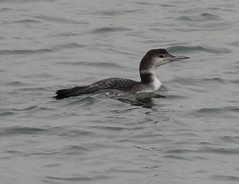 Our park ranger guides, Marissa and Andy, couldn't have been more enthusiastic or knew more about what we might hope to see. They had us carefully watch a cluster of birds feeding on the surface to see if we saw any seal heads pop up. Andy told us about the loons and Brant Geese (Branta bernicla) wading by the polar bears. Marissa told us stories about dolphins she's seen regularly patrolling east to west off the Rockaways. She told us about the time a seal hauled out on Coney Island and helpful New Yorkers dragged it back to sea--twice--before realizing it just wanted to sit on the sand.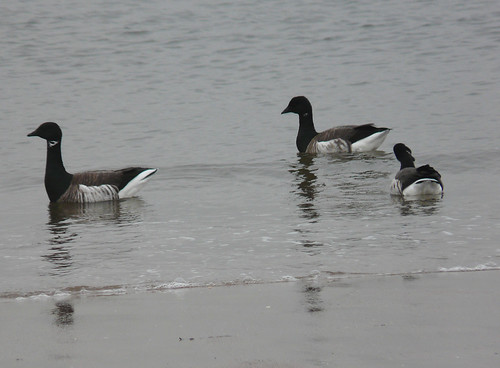
Where to See Seals
Where to See Wildlife in NYC
Saturday, January 30, 2010
NYC Starts Watching for Seals on Coney Island

But the Coney Island walk is billed as marine mammals. The most likely sighting is a porpoise, says a ranger I talked to. For seals, we could see harbor, harp, gray or even ring seals. There's also a chance of dolphins (common, white-sided) and whale (fin, minke or humpback). This season seals have been spotted in the Rockaways and the Bronx.
There are other, more reliable ways to see seals around New York City. Though I probably won't be able to resist the chance to look for them someplace a subway ride away.
- CRESLI (Coastal Research and Education Center of Long Island) has seal walks and boat tours on Montauk and a neat map of where you might see seals around Long Island.
- Seals also visit Sandy Hook in New Jersey from December to March.
- New York City Audubon has a cruise by a bunch of island on a water taxi.
- SKSA does kayak tours (wet or dry-suit required) on Long Island.
Where to See Seals
Where to See Wildlife in NYC
Thursday, January 14, 2010
Chinese Workers Save Ice-Blocked Harbor Seals
Animal-watching must be catching on in China. Government workers broke the ice to free 60 resident harbor seals trapped by a cold spell, then fed them fish. Xinhuanet describes the rescuers as "workers of the scenic area."
 Even the big Chinese news agency views the animals plight with sympathy. "Poor Harbor Seals Trapped by Ice," read the headline of their adorable slideshow.
Zinhuanet says the rescuers work at "ecological seal bay near Yantai City." I think they're talking about this giant tourist project, the Great Nanshan Ecological Park. Whatever the place is, they seem to realize how much people like to watch animals. Or maybe they're just suckers for a cute, whiskered face.


Zinhuanet says the rescuers work at "ecological seal bay near Yantai City." I think they're talking about this giant tourist project, the Great Nanshan Ecological Park. Whatever the place is, they seem to realize how much people like to watch animals. Or maybe they're just suckers for a cute, whiskered face.

Thursday, October 15, 2009
Visit Baby Harp Seals; Give Hunters a New Job and a New Attitude

More than 20 years ago, Ben Bressler first got the idea of taking tourists to see the whitecoats, the adorable white baby harp seals, which are famous for their brutal slaughter the on Canadian ice floes. Bressler, along with IFAW, figured if he could find a way to make more money off showing off seals than killing them, he could change their thinking.
"It's a much bigger issue there than the actual revenue," Bressler says. "The rest of Canada has nothing to do with hunting, but feels that Americans shouldn't be sticking their nose into their business."
So, he started bringing tourists. Decades later, both tourists and hunters still visit the baby seals. But Bressler's tours have gradually eroded the defiant enthusiasm for the seal hunt. In a world increasingly covered with identical suburban sprawl, the Magdelan Islands profit by drawing people to a place that looks completely different and has something no one can copy. No corporation can open up a franchise of its seal pup nursery in Times Square. The seal tours were just the first of Bressler's animal journeys: now he runs Natural Habitat Adventures, which takes tiny groups to secluded areas where animals live in the wild.
But to get there, Bressler first had to tackle all of the logistics and politics of the seal hunt. About 70% of the the hunting happens on "the Front," the wildly inacessable sea off Newfoundland and Labrador. But the pictures and protest focus on the Gulf of St. Lawrence, which, by comparison with the Front, is only moderately inaccessible. Hunters go out in late March on Gulf of St. Lawrence and in early April on the Front. The hunters on the Front tend to shoot seals from big commercial vessels that can go long distances. The St. Lawrence hunters tend ride out i the freezing water in rowboats, which they have to haul over ice, to reach the seals, which they club to death.
Obviously, neither the winter cruise from Newfoundland nor the rowboat tour of freezing St. Lawrence was going to appeal to tourists. So, Bressler first tried to helicopter the seal lovers in from Prince Edward Island, but when that proved too far, he launched them from Ille de Madeleine, a tiny island outpost of Quebec, where some seal hunters live.
And he offered the seal hunters another job. If they didn't hunt seals at all that season, they could work for him in a more comfortable job, taking Americans, Europeans and Japanese to the seals. The money worked out about the same--about $3,000 a season. But, Bressler offered a steady check--without the risk of a poor season or blowing too much money getting to the port in Nova Scotia. Bressler knows that groups like HarpSeals.org call for a boycott of all Canadian tourism. They single out the seals tours specifically because they employ hunters or former hunters. Bressler just says that the environmental movement needs all kinds of helpers and viewpoints.
At first the little community, whose tourist industry basically shuts down in winter, suspected the groups were animal activists in disuise. "They were not vey welcoming at first," he says. He wanted to convince them they were "really there just to see seals not protest and bring an alternative source of revenue. Gradually they started to trust us."
The baby seals are completely docile and trusting--which is what makes the hunt so easy and so revolting at the same time. Their trust also means visitors go right up to the seals, just like they were on the Galápagos. (Canadians are quick to point out that they banned hunting the pups under 2 weeks with the valuable white coats in 1987, but Sea Shepherd points out that just waiting until they molt into an uglier coat at 2-4 weeks doesn't make it any more humane.)
The hunt is going on at the same time, but Bressler takes care to steer clear, usually going to more distant ice. One time his helicopter was rerouted over the hunting site and he did get to see the gore. He and his passengers were understandably upset.
The tours, he says, have fallen off as the protests have calmed down. The operation was never terribly profitable anyway, he says. March used to be called Seal Hunt Season but know it's known as Seal Watch Season. "The younger people from the islands have lost the taste for this way of living," he says. The dozens of tourists who visit every year have got to have played a part in that shift.
Wednesday, September 16, 2009
Cape Cod Shark Update: Look Further Up the Coast, Captain Says
 Yesterday we reported on how the Great White Sharks that are closing beaches on Cape Cod are also drawing shark tourists. Today another seal boat captain tells us they're looking in the wrong spot.
Captain Keith Lincoln of Monomoy Island Ferry says that people are mistakenly hanging around Chatham Lighthouse since that's where the shark was first sighted by kayakers a eating a seal in August. "That is all due to the misleading information given by the media," says Captain Keith. "Massachusetts Department of Fisheries page shows all the taggings being done three miles south of the lighthouse near the area where South Beach and South Monomoy Island attached in 2006."
Looking at the Fisheries map here, he's totally right. Excellent tip, Captain Keith. (Though they do also show pictures of sharks offshore of the lighthouse.) He also warns that even if you're in the right place, the odds of seeing a shark are pretty impossible. The tagging teams use spotters on planes and perches 35 feet out of the water.
Captain Keith reports he's "calls about seeing the sharks, which is nearly impossible to guarantee." I think the seal tourists of Cape Cod have gotten spoiled; the tour boats can guarantee sightings because they're dealing with the east coast's biggest colony of gray seals, which is somewhere around 10,000. Normally wildlife watching is no sure thing.
Captain Keith, a 20-year veteran of the seal tours, says the sharks (and attendant media frenzy) come every year. "I think this year is a little different in that the sharks showed up in a large number all at once." The seal cruises have been popular since 1991 and continue to get more popular with a new tour company starting this year, amid the recession, Captain Keith says. "So that alone tells you people are interested in the seals." He doesn't anticipate any shark frenzy curbing enthusiasm for the seals. A bigger threat to the tours are the shifting sandbars and regulations about where they can dock, he says.
Seeing sharks is pretty iffy, but if you go out this fall, you can see lots of shorebirds like oystercatchers and sea ducks like eiders, scoters, and buffleheads. And in June, Monomoy is the Cape's best spot to see mating horseshoe crabs pile on the beach. Overall their populations are down about 90% on Cape Cod in the last few decades, but researchers have shown that Monomoy National Wildlife Refuge has some of the highest densities left
Meanwhile, if you really want to see a shark off Cape Cod, check out this guy at Nantucket Shark Dives, who does shark dives with chum 30 miles off Nantucket and gets to see lots of blue sharks.
Where to See Seals (and maybe sharks). The tours often require a minimum group to make it worth their while to go out as their business tapers off in the fall.
Monomoy Island Ferry
Usually runs April - December
90-minute cruise
Adults $30, Kids 15 and under $25
Look for signs for the Rip Ryder Monomoy Island Ferry and USFWS Headquarters.
BeachcomberChatham's Municipal Fish Pier on Shore Rd.
(508) 945-5265
Adults $27, Seniors $25, Kids 3 -15 $23, Kids under 3 are free.
Blue Claw Boat Tours
Orleans
Adults $25, Kids 12 and under $20
(508) 240-5783
From Nantucket (year-round)
Shearwater Excursions
(508) 228-7037
2.5 hours to Muskeget Island
Town Pier in downtown Nantucket.
$90 Adults, $70 Children under 12
- Where to See Seals in the U.S. and Canada
- Where to See Sharks
- More Places to See Wildlife in the Northeast
Tuesday, September 15, 2009
Sharks (& The East Coast's Biggest Seal Colony) Draw Tourists
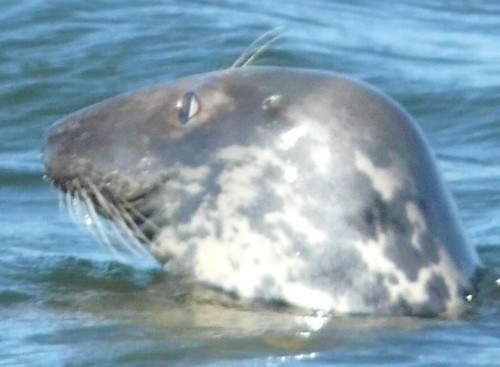 When news got out that Chatham, MA's, gray seal colony--the biggest on the east coast--was drawing sharks that closed beaches, a funny thing happened. Or didn't happen. Instead of running away scared, more tourists came to this little town on Cape Cod's elbow to see some sharks, hoping for a picture, or at least a glimpse.
"It's a big draw," says Lisa Franz, executive director of the Chatham Chamber of Commerce. "We have traffic jams... People are still walking in today and saying 'Where can we see them?'"
Tony LaCasse, a former veteran Boston TV newsman, says years ago local TV news would've been filled with scared would-be swimmers. But that was before years of education that drilled home how very unlikely it is to be bitten, let alone eaten, by a great white shark in New England. (Last fatal attack: 1936) Now we get shark tourists. "It's a long way from Jaws," says LaCasse, where the premise was they couldn't possibly close the beach on the Fourth of July.
The sharks are coming because the water is (briefly) warm and because the seal population has grown unchecked--well, that is, until the sharks showed up. Seal populations were kept artificially low for decades--maybe centuries. Until the 1960s, Massachusetts even paid a bounty for each seal ("a nickel a nose" in the early 1900s). Now seals are making a comeback. Cape has the biggest population on the American east coast, with roughly 10,000 (no one's done a formal count since 1999, when it was 5,600), according to the National Marine Fisheries Service 2008 report on gray seals. A few hundred live on the islands off Maine. but the U.S. population of gray seals is dwarfed by the Canadian one: More than 200,000 on Sable Island, Nova Scotia and 20,000 on the St. Lawrence.
In August kayakers spotted a great white shark munching on a seal near Chatham Lighthouse. Five sharks were seen close enough to the shore that cautious to the shore and surfers to close beaches over Labor Day. Mind you, beaches closed two weekends earlier for strong waves and that didn't make the evening news.
So far, however, the sharks are hard to see off Cape Cod. (Though plenty of places elsewhere cater to shark tourists.) Paula St. Pierre, who has run the Beachcomber tours out of Chatham for 11 years, says she hasn't seen any of the characteristic dorsal fins herself. "I don't want to see any," she says, at least not chasing the seals. "I saw one seal out there yesterday that had a big chunk taken out and shortly afterwards expired."
If you're looking for sharks, go to their meal, the seals. Some people go to the beach by Chatham Lighthouse (where seals hang out) to try to see some fins in the water, but the best bet for seeing the most seals or maybe even a dorsal fin are the seal boats.
Even if you don't get to see a great white, you'll get surprisingly close to the seals, which often approach the tour boats, St. Pierre says. "Seals come right up to the boat," she says. "They're as curious about us as we are about them. Not only can you see them, you can smell them." When sharks appeared in the past, the seals have even turned to the seal tourists for help. "In years past seals have tried to climb in the boat," when they've been afraid of sharks in the water, St. Pierre says. She had to fight the urge to help them up like a dog.
Seal-watching has become its own mini-industry on the Cape, with Beachcombers taking out 200 people a day at the peak of summer. About a half dozen seal tour operators line the coast.
No one is sure what will happen if the seals continue to draw such large numbers of sharks. Will there be a movement to get the seals to leave? (Tricky, because of the Marine Mammal Protection Act and certainly controversial.) Will Chatham have to install shark nets like they have in Australia? Or will shark tours move in to boost the economy?
"Summer would be a whole different story," says Franz. "September, it's like whoo-hoo, we've got a good shoulder season." Meanwhile, seal and shark watchers can get shoulder season rates now. And come winter, when the seal population peaks with migrants from Canada, you can get an even better deal to see a huge seal colony.
Where to See Seals (and maybe sharks). The tours often require a minimum group to make it worth their while to go out as their business tapers off in the fall.
Beachcomber
Chatham's Municipal Fish Pier on Shore Rd.
(508) 945-5265
Adults $27, Seniors $25, Kids 3 -15 $23, Kids under 3 are free.
Monomoy Island Ferry
90-minute cruise
Adults $30, Kids 15 and under $25
Look for signs for the Rip Ryder Monomoy Island Ferry and USFWS Headquarters.
Blue Claw Boat Tours
Orleans
Adults $25, Kids 12 and under $20
(508) 240-5783
From Nantucket (year-round)
Shearwater Excursions
(508) 228-7037
2.5 hours to Muskeget Island
Town Pier in downtown Nantucket.
$90 Adults, $70 Children under 12
- Where to See Seals in the U.S. and Canada
- Where to See Sharks
- More Places to See Wildlife in the Northeast
Monday, May 25, 2009
San Diego Wants to Get Rid of One of Country's Best Seal-Viewing Spots

Despite protests from local residents and the distaste of City Hall, San Diego is on the verge of spending $700,000 a year to play the sound of dogs barking to the 100-some seals at the Children's Pool. The harbor seals (small, gray and shy) and sea lions (big and more aggressive) have been hanging out at the beach for years, delighting tourists, seal protectors and at least some residents.
But others are fighting to use the area the way donor Ellen Browning Scripps originally intended and state law proscribes: for children. The manmade beach is the subject of dueling lawsuits. Valerie O'Sullivan wants to get rid of the seals and she got a state court judge to order the city to get rid of the seals to clean up the bacteria in the water.
Who is Valerie O'Sullivan? A former resident of La Jolla who moved out of the country years ago and isn't even a citizen. So, the city has argued she shouldn't have a say in the matter. But meanwhile, the city had to come up with this absurd, expensive plan to get rid of the seals by playing dogs barking dawn to dusk and spraying water on the seals.
Meanwhile seal lovers and the Animal Protection and Rescue League tried to get protection for the seals in federal court. The federal fisheries agency was no help: they said the city didn't need any special permit to get rid of the federally protected animals. Then again, that was a Bush era ruling, so is anyone surprised?
Meanwhile a third plan to save the seals is that the legislature could just change the the law about the purpose of the beach. San Diego says that the seals will just move to "Mission Beach, Pacific Beach and other nearby coastal spots." Of course if they knew that for sure, there wouldn't be any fuss really. Nobody knows what will become of the seals if they are forced out. It would be a lot easier to move the children's part of Children's Beach to one of those areas. It's a lot easier to get parents to comply with some common sense adaptations--aside from Ms. O'Sullivan. You can't tell seals where to go.
This is also a perfect case for federal protection. This beach is a unique natural attraction in the country. It's one of the few places you can go to see sea mammals reliably hauled out on the beach. The beach itself is no natural wonder; it's one of those giant let's mess with nature infastructure projects that would never get off the ground today. The sea lions that showed up one day at the San Francisco Pier 39 certainly got in the way of boaters. But the city reasonably worked out a way to let them stay--and got a delightful addition to the city.
Wednesday, February 11, 2009
Now's The Time To Go See Eagles and Seals
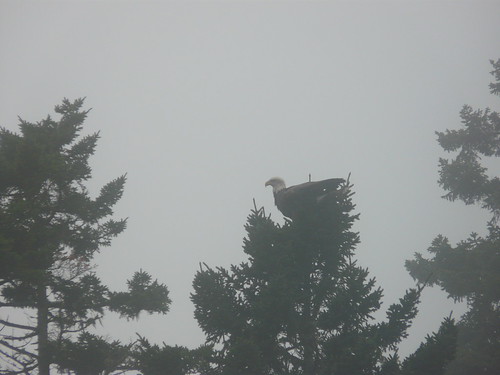
Just because it's winter doesn't mean there aren't lots of animals to watch. Here's a list of places to watch bald eagles all around the country are having their eagle watch or eagle festivals. Eagles can either migrate or stay put. This time of year the birds that live up north come down for open waters to fish in. They especially like waters near power plants and dams. (I guess they don't have to migrate as far down south if they can find some artificially heated water.
Although I grew up in a time when any eagle sighting would have been spectacular, eagles are now getting much easier to see on just about any big river. The Eagle Fest last weekend offered heated tents and experts, but since Croton Point Park near the Metro-North train station is one of the best spots, you could go anytime in probably from probably January to March This last week was an eagle watching festival at Croton-on-Hudson, which is just an hour north of New York City. Bruce Yolton took spectacular pictures of eagles riding the ice flows. Another great local raptor photographer, Francois Portman, told me he went up recently but only saw birds flying in the air. So, as always it's hit and miss.
Last weekend I tried to go see the seals that come to Sandy Hook in the winter, but just missed them. A ranger told me they had been right on the sand at Beach B, but I found none. When I walked out a mini-pier near Fort Hancock I asked two photographers if they'd seen anything. "Just a seal," one said. Just? But I didn't see any. The ranger also said that they're often seen just on the island or ice off shore.
Sunday, September 21, 2008
Prince Edward Islanders watching seal colony for sixty years

Yesterday David, Jolly and I got to see a huge colony of grey and harbor seals living on an island wildlife sanctuary on Prince Edward Island Canada. The Captain of Marine Adventures told us he'd been doing the tours for nine years and that the tour had been running since the early 1980s. He also mentioned that he recently had a 64-year-old woman passenger who said that her father used to take her out to see the seals when she was a little girl. It's fun to think of how long people have enjoyed just going out to see the seal colony.
The captain told us that a few years ago the seals were counted and there were about 300, but he now thinks there are less, somewhere between 200 and 300. The seal pups were wiped out in recent winters because there was no ice to protect them when a storm hit.

I couldn't count how many we saw sunning themselves on a sandbar with some cormorants and gulls. Or swimming out in the water to watch us. Some kept bobbing up behind the boat like they were following us. I asked the captain whether some people threw them fish--a tactic that more than one passenger on our cruise discussed. He said, no, it was illegal to feed them, but that maybe that's what they were looking for from the boats. Fishermen would shoot them if they saw them behind their boats, he said.
Generally this wasn't one of those narrative trips. We went out saw the seals and some mussel colonies, asked whatever questions we had. Fine. We really appreciated their letting Jolly come aboard. He just laid down and was fussed over by two sweet little girls. If Jolly wasn't able to go, David would've stayed on shore to watch him. We learned from our whale watch in Campobello that when a dog barks at a seal colony, all the seals dive into the water. So, it would be understandable if the captain didn't want Jolly. But instead of just banning dogs, he asked whether Jolly would bark.
Where to See More Seals
How to See More Wildlife in Canada
Subscribe to:
Posts (Atom)
