We've Moved!

Hi and Welcome to the AnimalTourism.com blog. But we've moved just down the street to this site, animaltourism.com/news. Please comment there.
Showing posts with label canada. Show all posts

Wednesday, May 12, 2010

Vancouver Suburb Burnaby Loves Its Crows

Burnaby Crows by Magalie L'Abbé
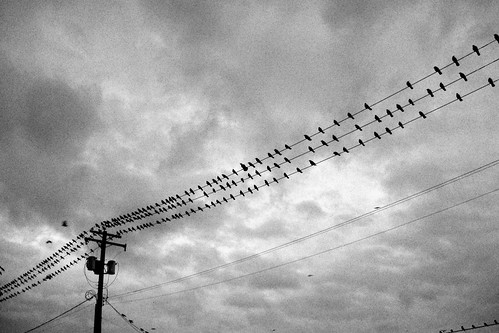
When crows pick a town to roost in, locals tend to react badly. They think it's spooky, worry about guano and try to do ridiculous things to drive them off--like shoot them. But one Canadian city sees it another way. Burnaby, BC, loves its crow roost. Thousands of crows have been sleeping together in the seaside town east of Vancouver since at least the 1970s.

"If you go around dusk they cover the sky," says Kelsey Downey, marketing coordinator for Tourism Burnaby. "I used to go to school right in the area and it’s a pretty amazing site."

The crows fly eastward over the city at dusk. They're more concentrated in the winter. And they tend to be seen most around Willingdon Avenue, which is an exit off Highway 1. Downey recommends checking out Still Creek Drive, which runs next to the highway.

Burnaby sticks up for their crows. Kirsten Starcher, who writes the blog Crows to Burnaby [which is really more about arts than crows] is just one of the residents who fretted when a Costco displaced one of the big roost sites in 2006 about how it would impact their crows. "It was sad to lose it," one crow fan told the Vancouver Sun at the time. Another protested on YouTube.

About 500 students each painted their own model crow for an art project Along the Flight Path, that fixed the crows to a fence.  A Vancouver tourism site boasted that the Northwestern Crow was the most conspicuous local bird and that Burnaby had "easily the most amazing gathering in the province." Crows.net says the Burnaby is "one of the most renowned crow roosts." It's great to see a town that appreciates its wildlife.

Where to Go to See Weird Birds or Unusual Bird Events
Where to See Animals Out West

Thursday, January 28, 2010

Set out on the Whale Trail: See Orcas from the Shore in Washington State

People may have heard of watching orcas off San Juan Islands,  but Donna Sandstrom wants everyone to realize whales are all over the coastal waters of Washington State, including the Salish Sea. For the last two years she's been working with seven government groups pulling together The Whale Trail, 15 spots where people can see whales from the shore.

Aside from Lime Kiln Point State Park, which bills itself as the best shore-based whale-watching site in the whole world, the Whale Trail reaches up to Vancouver and down to coastal La Push, where the Quileute Nation welcomes the gray whales when they return from their migration to Mexico.


"They could go extinct in 100 years and that's heartbreaking to me," she says. "We are right at the intersection of whether they make it or not." Yet down the coast from the San Juans people in her native Seattle are largely oblivious to the presence of killer whales, Orcinus orca right outside their doors. "It always makes me a little sad that people are surprised whales are here," she says.

Now they'll be able to look up public places where they can see whales from public land--which means the viewing is free for people, environmentally low impact and no hassle for whales. Tour operators, sensing the project will just spur more interest, even helped set it up. Behavioral biologist and author Toni Frohoff, has called land-based whale watching "the ideal form," noting that it works so well in the area "because it gets so deep right off" the shore.

Sandstrom pulled together what she calls a dream team of area whale experts, many of whom she met when they cooperated to rescue Springer, a calf separated from her mother. They pulled together a list of places people could visit where there was a "reasonable chance of viewing whales" at least part of the year.

All of the invited spots said yes. The idea of organizing the spots "seems like its latent in the air," she says. Oregon has organized Whale Spoken Here sites along its coast. Labrador and Newfoundland provide a neat map of boat and shore-based sites. But those were largely government projects that had tourism in mind. Sandstrom's project is more focused on the community--getting people to enjoy and understand their wildlife. "To me it's all about local community," she says. "These are communities who want to be part of this."

Each spot will get signs detailing what people can expect to see in the area and when. The focus is on killer whales, but gray whales, seals and sea lions won't be neglected. Eventually they'd like to train volunteers in each spot.  

The inspiration was the Mission Bell trail in her native California, but the resulting Whale Trail is, I think, even better. The whales are alive and the whale trail will grow as more people figure it out.

Check out the Whale Trail  
Find More Places to See Whales

Tuesday, November 10, 2009

A Scourge of Bunny Rabbits?

Stadspark (City Park) in Antwerp, Belgium, has bunnies like Central Park has squirrels. At first I didn't believe a local who told me of the roaming rabbits, but they aren't hard to find. In fact, they were hard to miss. Black, white, multi-color rabbits that had clearly been released from careless pet owners, nonchalantly gathered in clusters and hopped across paths.

Antwerp is not alone. It's just one of many places around the world facing a surging rabbit population. Stockholm parks managers kill thousands of rabbits a year, so many that this year they decided to start burning them as fuel. England is worried of a rabbit surge. Even Mike Ballast, the composer who wrote theme song for the embattled rabbits of Watership Down, has been wiping out rabbits on his estate. In British Columbia, the town of Kelowna has been hunting bunnies with air rifles, but will now catch them and try to give them to rabbit rescue groups or neuter them like feral cats.

What's going on here? There are two kinds of rabbits: wild and dumped pets.Both groups are benefiting from some changes: in Europe 95% of rabbits were wiped out by the myxomatosis virus in the 1950s. But resistant rabbits thrived and over the decades the population came back to levels not seen in many people's lifetimes. Some also think global warming lets them overwinter in places that were once inhospitable. And there's the lack of natural predators. Or even unnatural predators, like unleashed dogs, which have vanished since the 1950s.

The dumped pets generally can't survive in a real forest; they starve to death or are eaten by predators, according to the House Rabbit Society. A predator-free city park with human feeders can be another story. Some of the rabbits I saw in Antwerp were babies--too cute to have been dumped. So I think they're successful enough to breed. People who dump pets are hard to catch--unless the cities start requiring microchips in rabbits, which could quickly put an end to the problem.

What's odd is that there's been little effort to introduce natural predators. That's admittedly difficult in a city park. But fox and rabbits are the classic population cycle relationship biologists have been using for decades. English pest control agents are using ferrets to chase them out of holes. If there are any natural predators out there, they're likely to start surging on their own with this healthy diet.

Thursday, October 15, 2009

Visit Baby Harp Seals; Give Hunters a New Job and a New Attitude


More than 20 years ago, Ben Bressler first got the idea of taking tourists to see the whitecoats, the adorable white baby harp seals, which are famous for their brutal slaughter the on Canadian ice floes. Bressler, along with IFAW, figured if he could find a way to make more money off showing off seals than killing them, he could change their thinking.

"It's a much bigger issue there than the actual revenue," Bressler says. "The rest of Canada has nothing to do with hunting, but feels that Americans shouldn't be sticking their nose into their business."

So, he started bringing tourists. Decades later, both tourists and hunters still visit the baby seals. But Bressler's tours have gradually eroded the defiant enthusiasm for the seal hunt. In a world increasingly covered with identical suburban sprawl, the Magdelan Islands profit by drawing people to a place that looks completely different and has something no one can copy. No corporation can open up a franchise of its seal pup nursery in Times Square. The seal tours were just the first of Bressler's animal journeys: now he runs Natural Habitat Adventures, which takes tiny groups to secluded areas where animals live in the wild.

But to get there, Bressler first had to tackle all of the logistics and politics of the seal hunt. About 70% of the the hunting happens on "the Front," the wildly inacessable sea off Newfoundland and Labrador. But the pictures and protest focus on the Gulf of St. Lawrence, which, by comparison with the Front, is only moderately inaccessible. Hunters go out in late March on Gulf of St. Lawrence and in early April on the Front. The hunters on the Front tend to shoot seals from big commercial vessels that can go long distances. The St. Lawrence hunters tend ride out i the freezing water in rowboats, which they have to haul over ice, to reach the seals, which they club to death.

Obviously, neither the winter cruise from Newfoundland nor the rowboat tour of freezing St. Lawrence was going to appeal to tourists. So, Bressler first tried to helicopter the seal lovers in from Prince Edward Island, but when that proved too far, he launched them from Ille de Madeleine, a tiny island outpost of Quebec, where some seal hunters live.


And he offered the seal hunters another job. If they didn't hunt seals at all that season, they could work for him in a more comfortable job, taking Americans, Europeans and Japanese to the seals. The money worked out about the same--about $3,000 a season. But, Bressler offered a steady check--without the risk of a poor season or blowing too much money getting to the port in Nova Scotia. Bressler knows that groups like HarpSeals.org call for a boycott of all Canadian tourism. They single out the seals tours specifically because they employ hunters or former hunters. Bressler just says that the environmental movement needs all kinds of helpers and viewpoints.


At first the little community, whose tourist industry basically shuts down in winter, suspected the groups were animal activists in disuise. "They were not vey welcoming at first," he says. He wanted to convince them they were "really there just to see seals not protest and bring an alternative source of revenue. Gradually they started to trust us."

The baby seals are completely docile and trusting--which is what makes the hunt so easy and so revolting at the same time. Their trust also means visitors go right up to the seals, just like they were on the Galápagos. (Canadians are quick to point out that they banned hunting the pups under 2 weeks with the valuable white coats  in 1987, but Sea Shepherd points out that just waiting until they molt into an uglier coat at 2-4 weeks doesn't make it any more humane.)

The hunt is going on at the same time, but Bressler takes care to steer clear, usually going to more distant ice. One time his helicopter was rerouted over the hunting site and he did get to see the gore. He and his passengers were understandably upset.

The tours, he says, have fallen off as the protests have calmed down. The operation was never terribly profitable anyway, he says. March used to be called Seal Hunt Season but know it's known as Seal Watch Season. "The younger people from the islands have lost the taste for this way of living," he says. The dozens of tourists who visit every year have got to have played a part in that shift.

Tuesday, October 07, 2008

See Bears Without Hunting Them?


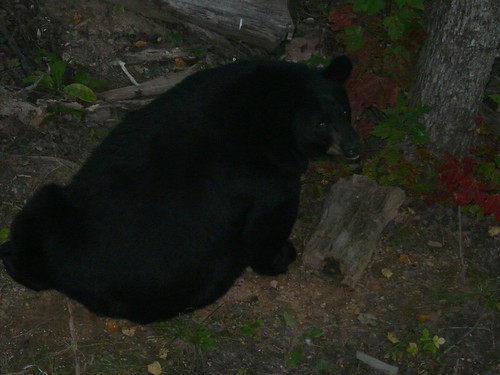
I finally got to see wild bears on a trip last month to New Brunswick, Canada. Acadian Richard Goguen built a bear-viewing tower and an increasingly succesful business on his family land, Little, Big Bear Safari.

Back in 2000 Richard got tired of guiding hunters to kill animals they weren't going to eat. (He's not anti-hunting; he still hunts for food.) He had more fun taking people out to take pictures of the bears, says his multi-lingual wife, Vivianne.

Richard first built a tower for six people in 1998, but he's had to expand. His current tower (his third) fits about 50 people, has two covered staircases, a wood stove and lots of open windows to see bears.

The experience starts back at the Goguen house in Acadieville, which is about 150 miles from Maine. The Goguens pass around pictures, tell stories and all the bear tourists meet up. The night I went there was a German couple, another European couple, and a few locals who were friends of Richard. They're forest rangers and sometimes fill in for Richard, who also works as a school bus driver. One brought his father, a bear hunter.

If this were in America, I'm sure there would've been tons of t-shirts, shot glasses and bear junk available. (And I probably would've bought some.) They just have a few key chains and some paintings. We all signed legal waivers. In the U.S. I'm sure they would've been more than the one page. Actually, I'm pretty sure this wouldn't happen at all--both because of liability and prohibitions against feeding bears unless you're hunting them.

Which is what makes this a great place for Americans to visit. It's only 150 miles from Maine, near Kouchibouguac National Park on the coast of the Northumberland Straight.

Vivianne drives us out to the bear tower in a little white bus. In the back are bushels of apples, which Richard dispenses with piles of meat and nuts. Then, she'll drive back to the house. The bears would climb on if they left the van there, Richard explains. (But if anyone gets spooked, they'll come pick them up.)

Along the way Richard explains that he has known three generations of this group of bears. One bear--now the grandmother--used to follow him around. Then her daughter did. And now the daughter has shown her two youngsters to do the same. But, he says, he doesn't know all the bears. Some bears are regulars and some come and go. Last night there were 13--putting to rest my fears that there wouldn't be any.

When we pull up to the bear tower, none are in sight. But by the time Richard delivers the food, four come out of nowhere. We hustle up the wood stairs (covered by metal gates) and onto the viewing platform. Richard leaves the food on different sides so there's plenty of room to see the bears from the windows on two sides of the tower. Richard tells us to keep our voices low, but that flashes don't bother the bears. The sound of metal--like change jingling--does though, he says.

Within minutes all of the bear viewers are giddy and awestruck. We get to see the bears interacting. Some are family. Two juveniles eat, but cautiously. One gets chased up a tree by an adult. Later one adult chases another down the dirt road. One big bear hogs the meat. Others just lounge by the apples, swooping up the fruit with their paws. Still others wander between feeding stations, like shoppers always worried someone else is getting something better.

Richard says that since I'm a journalist, he'll let me go down to the open viewing platform below the main one. Here's it's just an outdoor wood staircase, like a Chicago fire escape. I'm about 15 feet up and can see and hear the bears walk under the platform. Some look up at me. When I see the young bear climb a tree, I am reminded that they could climb up to where I am in seconds. I'm tempted to go back inside. But I'm too fascinated to leave.

Blue jays and red squirrels come by. They seem to know the feeding schedule, too. The bears half-heartedly swat them away.

Towards the end of our 90 minute visit, Richard goes out and feeds some of the bears by hand. Then I feel ridiculous for being afraid that these bears, who have a feast in front of them, after all, would contemplate eating me. Richard insists that he knows the bears he's feeding. His wife says that he never approaches a bear, he waits for the bear to come to him. He jokes that neighbors tell him that some day he will end up in a bear's tummy.

Still, the whole hand feeding thing makes me nervous. As I film it, I feel like I'm watching the beginning of a horrible youtube clip. I think about Timothy Treadwell, who also thought he had a special relationship with bears and who was killed by an aggressive bear he didn't know. (But those were the more aggressive grizzlies.) Also, it makes the bears seem less wild.

On the drive back I talk with one of the forest rangers. He's happy to see a New Yorker like me--or anyone from far away--coming to enjoy the New Brunswick bears. And he should be proud of it. What the Goguens have built is a really smart animal tourism attraction, unique in the world, one that takes provides a regular income to locals off wildlife without killing the bears. There are bear-viewing places out west, but they rely on grizzlies eating salmon. Here they've created their own food source (which wouldn't work in a populated area and I'm sure would raise objections to people worried about bears becoming habituated to humans and human food). Richard hopes to I'd recommend the experience to anyone and I wouldn't be surprised to see it copied.

Where to Go See Bear
Where to See Wildlife in Canada

Sunday, September 21, 2008

Prince Edward Island: XL Blue Jays Eat From Your Hand


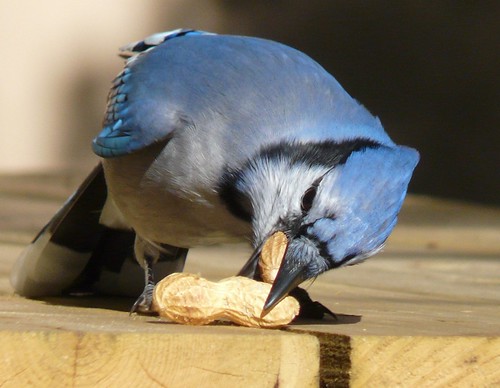
We wanted to see the seals on Prince Edward Island, but got an extra treat at our cabin: huge, friendly blue jays. Blue jays are the official bird of this Canadian province, but that usually means nothing. But they're everywhere here.

Glenn Saunders, our host at Forest and Stream Cottages in Murray Harbor, PE, told us that last year he had the jays eating out of his hand. This year, he said at first, he hadn't put the time into it.

Our cottage is next to the B&B, which has big windows and lots of bird feeders. I put some peanuts out for the red squirrels and chipmunks and the blue jays quickly buzzed in and picked them up.

I figured they were so bold, they probably would let me sit at the picnic table while they took nuts off it. They complained a lot about the situation from the trees, but eventually they did it. They'd swoop in, sometimes with a thud. Eventually they got used to the situation and slowed down, shoving two peanuts in their mouths (one half down their throats).

The jays were so close, so loud, I could see them interact. One was a juvenile, which I never would have known by its husky size. But it would cry and flap its wings, begging its parents for food, then chase after them when they got a nut.

Glenn told us he got the jays to eat from his hand. Then he took the time to show me how he did it. First he'd put the peanut on a porch railing, then whistle them in. Then he'd hold out his hand and the jays would come to the porch roof, then furtively fly down and take a nut.

He guided me and much to my surprise and delight they ate from my hand, too. Four times. They did a lot of fretting between the tree and the roof, but eventually swooped in and took the nuts. I've always liked blue jays and their bossy personalities, but this made melove them even more.

Where Else to See Wildlife in Canada
Where to See Odd Birds

New Brunswick Moose Cruise


I've heard about going with hunting guides on wildlife watching tours, but never done it. A guy I know who gives bear viewing (and not hunting) tours says the hunters mock the watchers. But the wildlife watching business isn't nearly as developed as the hunting guide one. So where do you go if you want someone that really knows animals?

Staying in Fundy National Park I saw a brochure for nearby Adair's Wilderness Lodge and their "wildlife tours." Another couple in the park said everyone who went there loved it. I called and talked to Ida Adair, who said we might see deer or moose, but nothing's guaranteed. Wildlife watchers know that's part of the deal. The only ones who say you're going to see an animal for sure either are lying or have some place staked out where habituated animals visit regular. The Adairs are neither. Also, they said taking our dog was fine. Larry Adair takes his shepherd with on trips, too.

We cruised around in Larry's white van, pounding over dusty clay roads, looking in every field. A good part of the fun of the trip with Larry Adair is hearing his stories about his past adventures in the wild, with animals and with people. He may have been holding back any hunting stories that would've turned me off, but I think of him more as an enthusiastic outdoorsman. When I took a class for a hunting license for research, the instructor talked about the true sportsmen, who didn't care whether they actually killed any animals, just about whether they had a good time with friends and helped others enjoy the wilderness. That's Larry.

When I mentioned how some people in the states now get annoyed at seeing deer (which are still relatively rare in these parts), he responded "There's nothing more exciting than seeing a wild animal."

And we did get to see two moose cows. One, off in a field in the perfect sunset glow. The other was there when we looped back. Larry told me I could get in closer, just move when the moose's head was down. Smart tip.

Larry mentioned that a big hunk of land near him might become part of Fundy National Park. When people asked him whether that would put him out of business, he said, no, he can make money teaching people how to hunt, with a gun or with a camera.

Ida, who made the pumpkin pie we had for dinner, also had neat stories about wildlife, like seeing the migration of nighthawks.

We also really appreciated the more laid back attitude in general in Canada about travelling with dogs. Originally for this fall trip David and I planned on going to Maine and maybe see some moose in the rut. But, we're travelling with our old dog Jolly. He's nearly 15 and we don't know if this will be his last adventure.

But Maine wasn't so accommodating. Baxter State Park doesn't allow dogs. A moose tour out of Millinocket doesn't either. David would've been content to stay behind but they didn't even allow dogs in the cottage. So, we decided to head to New Brunswick, figuring it would be just like Maine, only more so.

We're definitely tempted to come back to Adair's in a bit. Larry says right after the 3-day moose hunt this week will be the rut. And then he'll be able to call in a bull moose.

Where to See More Moose
See More Wildlilfe in Canada

Prince Edward Islanders watching seal colony for sixty years


Yesterday David, Jolly and I got to see a huge colony of grey and harbor seals living on an island wildlife sanctuary on Prince Edward Island Canada. The Captain of Marine Adventures told us he'd been doing the tours for nine years and that the tour had been running since the early 1980s. He also mentioned that he recently had a 64-year-old woman passenger who said that her father used to take her out to see the seals when she was a little girl. It's fun to think of how long people have enjoyed just going out to see the seal colony.

The captain told us that a few years ago the seals were counted and there were about 300, but he now thinks there are less, somewhere between 200 and 300. The seal pups were wiped out in recent winters because there was no ice to protect them when a storm hit.

I couldn't count how many we saw sunning themselves on a sandbar with some cormorants and gulls. Or swimming out in the water to watch us. Some kept bobbing up behind the boat like they were following us. I asked the captain whether some people threw them fish--a tactic that more than one passenger on our cruise discussed. He said, no, it was illegal to feed them, but that maybe that's what they were looking for from the boats. Fishermen would shoot them if they saw them behind their boats, he said.

Generally this wasn't one of those narrative trips. We went out saw the seals and some mussel colonies, asked whatever questions we had. Fine. We really appreciated their letting Jolly come aboard. He just laid down and was fussed over by two sweet little girls. If Jolly wasn't able to go, David would've stayed on shore to watch him. We learned from our whale watch in Campobello that when a dog barks at a seal colony, all the seals dive into the water. So, it would be understandable if the captain didn't want Jolly. But instead of just banning dogs, he asked whether Jolly would bark.

Where to See More Seals


How to See More Wildlife in Canada

Thursday, August 14, 2008

Baby Beluga Shows Up in Bay of Fundy

Baby Beluga Shows Up in Bay of Fundy

Teri at Bay of Fundy Blog reports that a young Beluga Whale has shown up in the bay between Nova Scotia and New Brunswick known for its record tides. What's unusual is a) a Beluga showing in the bay at all and b) any whale showing up this deep in the bay.

CTV has a great story on the whale, known as Q, and describe the two-year-old as friendly and curious. This isn't a story about an endangered animal increasing its range--which would be terrific. It's more the story of an individual somehow getting separated from its family--which is sad and scary. Some belugas live up in the St. Lawrence, so maybe that's where Q's pod is.

Scientists are also worried about people hanging around Q too much. Local fishermen are taking understandably excited locals out to see Q. The Whale Stewardship Project on Nova Scotia says that "orphaned, lost or somehow separated from their family pods, juvenile whales often begin to seek out human companionship and interact with boats and other objects." The project is worried that whales will get used to friendly boats then get hurt by not so friendly people or propellers.

Let's hope this doesn't turn into yet another story where the people who love an animal end up causing it harm.

Where to See Animals in Canada
Best Whale-Watching Spots Around the World