You've got one day to swoop in and buy lunch with a celebrity, or at least Dennis Kucinich, to support cows, pigs, chickens and other farm animals. his time it's at and for Farm Sanctuary, which fights for animals stuck in agribusiness. Right now you can get a Kim Bassinger-signed shirt for $125 and there are still some good deals for the chance to meet Joan Jett or the B-52s before a concert.
Ellen isn't selling her personal stuff--just two VIP tickets to Ellen. But it is a personal cause. Ellen is vegan and explains on her website why: "I personally chose to go vegan because I educated myself on factory farming and cruelty to animals, and I suddenly realized that what was on my plate were living things, with feelings. And I just couldn’t disconnect myself from it any longer."
About two years ago some local Florida manatee lovers took some disturbing video of tourists and tour guides pestering manatees. Tracy Colson and Steve Kingry posted shots on YouTube of tour guides holding manatees so that tourists could touch them. Some tourists also kicked them and tried to sit on the sea cows. Finally, about two years later, something might actually be done to protect this endangered species whose population has dwindled to about 3,000 from Florida hooligans.
Spurred on by the videos, this summer the Public Employees for Environmental Responsibility (PEER) officially asked the Fish and Wildlife Service to ban "Swim with Manatee" programs. Tourists aren't supposed to get within 50 yards of dolphins or 100 yards of whales in NOAA's (voluntary) guidelines for those tour operators. But at least there is some enforcement for whale boats. NOAA also won't let tour operators show ads that have people interacting with, chasing, petting or riding whale or dolphins in the Dolphin Sense and Whale Smart programs. So how can tours advertise swimming with the far more endangered manatee?
Before I had heard about any of this going on in Florida, I saw ads online for sleazy outfits around Cancun that advertised Swim With Manatees programs. Yuck, I thought. Don't people know that manatees (or any animals) don't want to be forced to swim with them. But I had no idea there were plenty of places in Florida getting away with it, too. Then I read an incredible story travel writer Andrew Mersmann did for Passport Magazine last year about Florida manatee tours that end up harassing manatees.
Mersmann says people in the industry know exactly which are the bad ones. He went on both to see what was really going on. The captain of one tour told the groups: “It’s a good day if you see a manatee, but it’s not a great day unless you touch one.” You are, of course, not supposed to pet the manatees any more than you're supposed to cuddle a polar bear. The difference is manatees can't fight back. And even when they try to get away, videos posted on YouTube show, the tour guides restrain them so the tourists can play.
What's wrong with swimming with manatees? Morally, if you bother manatees, they stop what they're doing. Manatees don't have frivolous hobbies; whatever they're doing, they need to do it to survive. They're an endangered species. They need to eat grass, nurse from their mothers, sleep, come up to the surface to breathe.
Legally pestering, holding, riding, kicking manatees--again, all documented--is a violation of Florida state law, the Endangered Species and the Marine Mammal Protection Act, which bans "taking" a manatee. Taking is defined doing anything on purpose or by negligence "to harass, harm, pursue, hunt, shoot, wound, kill, trap, capture, or collect, or to attempt to engage in any such conduct." It goes on to clarify that it includes "the restraint or detention of a marine mammal, no matter how temporary...causing disruption of behavioral patterns, including, but not limited to migration, breathing, nursing, breeding, feeding, or sheltering."
The Marine Mammal Commission has recommended not allowing people to approach within 10 feet of manatees. (If they come to you, that's fine. And that's exactly what skilled manatee watchers say will happend if people would just be patient.) The manatees, Mersmann writes often leave lagoons as soon as the tour boats show up.
In August the Fish and Wildlife Service basically said no to the request to ban the programs, reasoning, more or less, that harassing manatees was already illegal. And that they could only provide some protections to threatened animals and since manatees are already endangered--a notch worse--they're out of luck.
"They saw that harasment of mantees is illegal," says PEER staff attorney Christine Erickson. "What they're allowing people to do is causing harassment." So PEER is going to take the FWS to court. They want to get more sanctuaries set up and ban the swim with programs in the winter, which the manatees need to be in the warm shallow water to survive. The sanctuaries are small areas with the warmest water where manatees can go and people can't. The manatees know that and retreat there when they get tired of people. Let's hope this
Let's hope this finally means the manatees will get a break.
Even though the recession has strained animal welfare groups of all kinds, I find a growing number of farm sanctuaries. With 9 billion animals killed on farms in the U.S. each year, the people who run these sanctuaries aren't kidding themselves. They know they're saving only a a token number of horses, pigs, goats, sheep, ducks, donkeys or chickens. But they think it's worth it--both for the animals they save and for the hope these animal might teach visitors that even cows or pigs have personalities and deserve some dignity.
Berkshire Bird Paradise, Grafton, NY
Bird Paradise is one of the country's biggest bird sanctuaries. (It's also one of the hardest to find, off Route 2 in NY, near the Massachusetts/Vermont border.) More than 2,000 birds (100 species) live here and lots of them are the big ones everyone wants to see: bald and golden eagles; many kinds of large hawks; exotic pheasants; former pet songbirds; barnyard refugees; black swans. You'll walk through a long green house-esque tunnel of former pets, then out to the yard. Ducks, geese and swans swim in a pond while pheasants and chickens wander around. Twelve bald eagles hang out together in the back. At the right time of year, visitors can hide in a special blind to watch a disabled bald eagle matings pair, Ross and Marilyn, and their family. The chicks they raise fly off to the wild (though return for occassional visits).
Director Peter Dubacher started rescuing birds here in 1975. Friendly supporters drop by with food, building supplies as well as money.
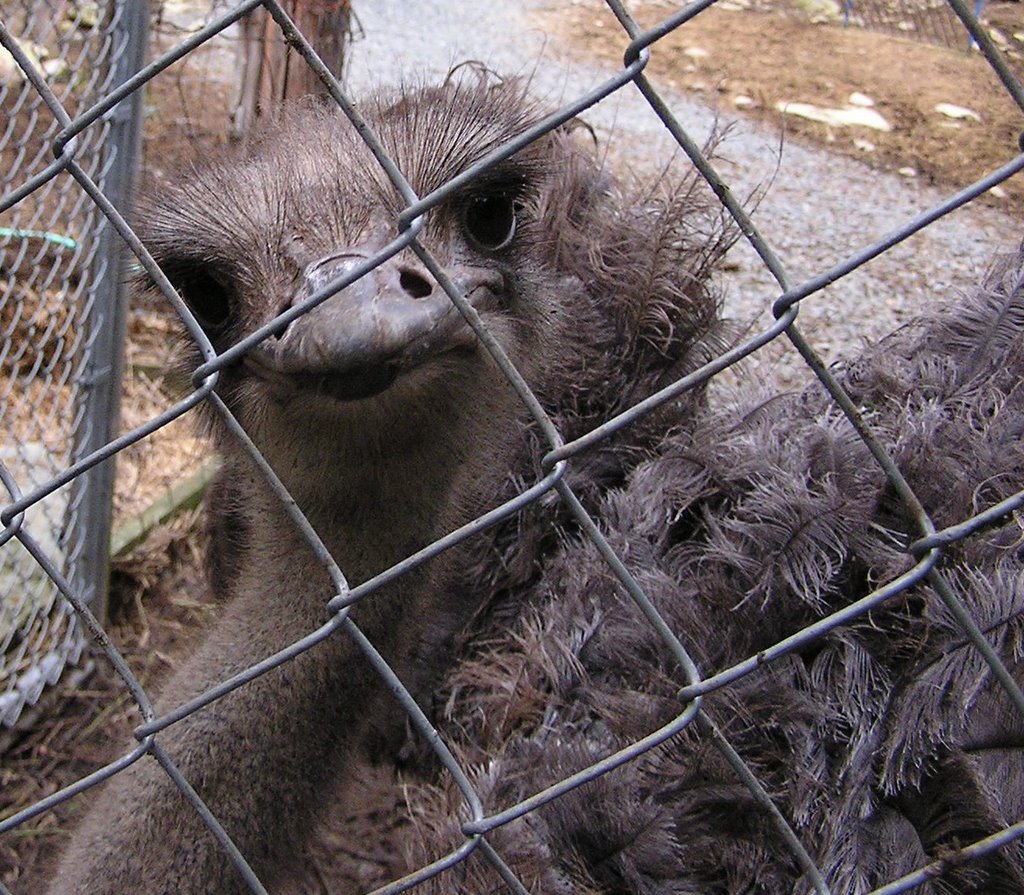
When chicks aren't around, the emus still the show. These giant gangly birds are very curious about their human visitors. About human height, they seem to want to dance with you from the other side of the chain link fence. They twist their necks around to get a closer view and beg for food.
About 40% of the birds here couldn't make it in the wild and so will live out their lives here.