We've Moved!

Hi and Welcome to the AnimalTourism.com blog. But we've moved just down the street to this site, animaltourism.com/news. Please comment there.
Showing posts with label parrot. Show all posts

Monday, May 31, 2010

Feral Parrots Land in Lower Manhattan

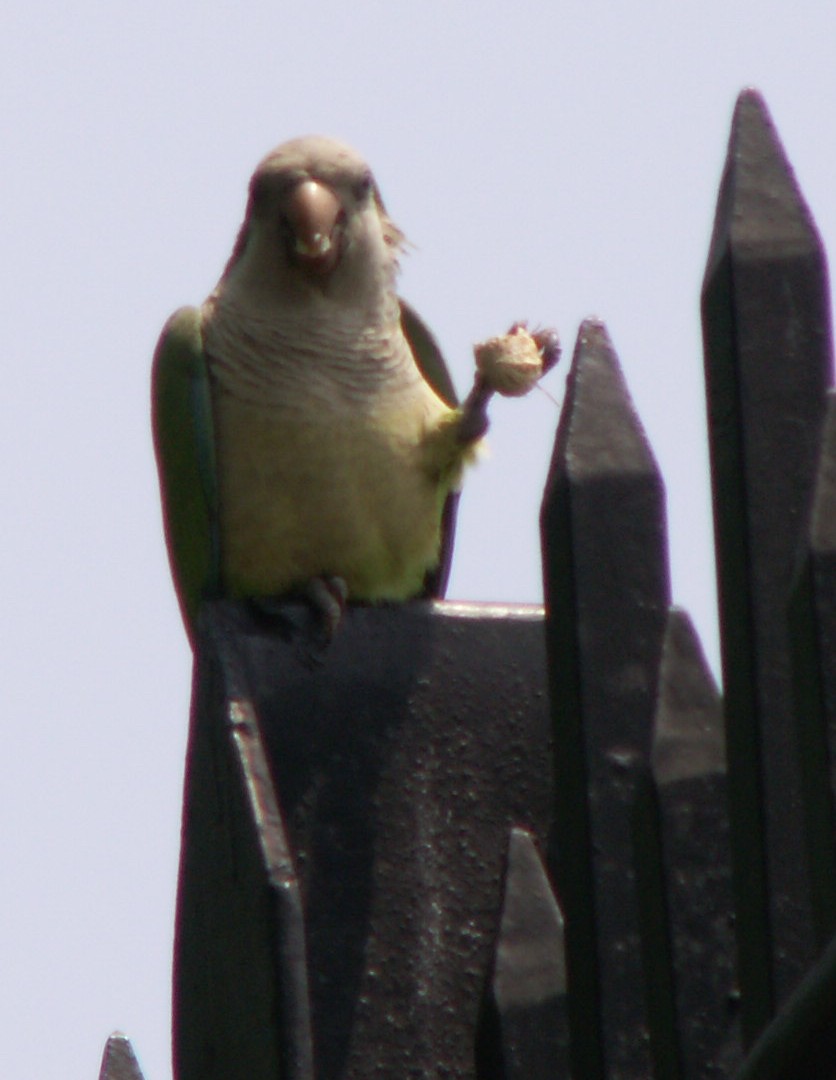
Parrot near Brooklyn College
Brooklyn, Queens and the Bronx has had colonies of parrots for a while, but now the little green birds may be starting a colony in lower Manhattan. Dennis Edge, a friendly birder who is compiling a book of his many finds around Tompkins Square Park, says he's seen at least two for a couple months in Tompkins and nearby community gardens.

It's too late to be building a nest for eggs, he says, but the birds seem to be building something--like one of their insanely huge colony nests, which can grow to the size of a smartcar. No one knows where, but once the colony gets going, it's huge and they like to build them on tall towers (or trees in a pinch), so it shouldn't be hard to fine in the East Village.

Steve Baldwin has done an amazing job tracking and advocating for the monk parakeets or Quaker parrots at BrooklynParrots.com. He gives free, frequent tours by Brooklyn College and Greenwood Cemetery. At one point he had a highly-detailed map on his site of nests around  New York City and New Jersey, but he took it down after reports of men showing up in vans and grabbing birds.

These huge nests make the parrots unpopular.
The feral parrots x are from South America, but have shown up in cities worldwide, even cold ones, usually with a myth about them escaping from an airport crate. They run into trouble for destroying crops and messing with electrical lines when they build their huge nests. But people love them. And they're an okay replacement species for the Carolina Parakeet that we Americans wiped out a century ago.

Now that red-tailed hawks are becoming commonplace, it's fun to have a new freaky species to look for.

Where to Go to See Parrots in the U.S.
Check Out BrooklynParrots.com

Monday, March 01, 2010

Odd Stories in Animals This Week

New York City may finally  be safe for parrots. The city council is about to vote on a bill that would protect the colonies of monk parrots.

Texas girl survives rabies without much treatment. She did become "combative" as one of her symptoms, though.

The Fish and Wildlife Service is auctioning off 300,000 items made from wildlife to save on storage costs. Don't expect any rhino heads or elephant feet. They aren't selling anything endangered and the listings so far are pretty tame: Avon watches or Cole Haan "leather driving slippers w/ dog-faces water snake skin trim." This isn't what you fear: it's a kind of snake.

Fruit bats can eat fermented fruit because they're big drunks anyway.

The Sage Grouse might be declared endangered by next Friday. Guess what? The Wyoming Tribune doesn't think they deserve it and thinks the 2005 decision by the Bush administration--though found tainted by politics--was just fine.

This cow in India can milk herself. She doesn't need anyone to pull on her udders, she just whizzes the milk away.

Friday, January 22, 2010

Cold Snap--Or At Least Colds--May Push Back Florida Invasives

Florida's cold snap could provide the big check on invasive species biologists have been wanting for decades. We could see less iguanas and pythons--and also fewer more beloved animals such as parrots. Even animals that didn't die in the cold could die of a cold in coming weeks.

"I expect we're going to have huge, huge mortality, maybe even in Miami itself," says Florida Fish and Wildlife Commission invasive species expert Scott Hardin. "Those that didn't die [from the cold] could easily die of a respiratory infection."

The Everglades' infamous python invaders were at least cold-stunned and perhaps hurt worse. Researchers found that 10 of 11 of the giant snakes they tracked weren't moving, Hardin said. He added that he didn't have word yet on the giant parrot colonies that live around the state, especially Miami.

Given the hurt the freezing temperatures caused Floridians, Hardin didn't want to sound too gleeful. But he so clearly was. The non-natives can push out species that naturally belong, and they've been running amok for 30-40 years, the last time Florida saw weather this harsh.

A few of the more vulnerable native animals were also hurt by the wintry blast. Hundreds of sea turtles were rescued, but hundreds more found dead, according to Hardin. The state did get to tag and collect information on lots of endangered green turtles.

Florida got a record count of manatees (5,067) because they're easier to see when they're crowded around the warm water of power plants and natural springs. Officials warned tourists to stay away so the manatees wouldn't leave the warm areas they need to survive. And not just the big tours known for their inappropriate petting, either. Manatee advocate Tracy Colson says even kayak tour operators like hers suspended operations to let the manatees warm up.

Tuesday, January 12, 2010

Iguanas Dropping, Manatees Gathering, Pythons Surviving in Florida's Cold

Florida's harsh cold spell is a bonanza for animal watchers, if not for the Florida animals themselves. Manatees are gathering around power plants and hot springs. Iguanas are dropping from trees in a kind of cold coma. Cold-stunned turtles are warming up in hotel rooms. Pythons are sunning themselves. And waterfowl are migrating down from other states, says Gary Morse, a spokesman for Florida's Fish and Wildlife Commission.


Manatees: The manatees are the ones wildlife officials are worried about. They're native, endangered and hate the cold. Sea cows need water at least 68 degrees to survive. Last year at least 56 died of cold stress, the FWC says. This year they'd like people to give them a break and back off for a bit. "They are stressed from the cold and from not eating. We advise people not to approach them in these times," Morse says. "Our mere presence as human beings can cause them to flee the very thing they need." The FWC already pulled two frigid manatees from cold water and sent to a zoo and an aquarium to warm up.

Sea Turtles: Sea Turtles often turn up at the same hot spots that draw manatees. But if they don't they become sluggish and eventually get cold-stunned and beach themselves. Rescuers are swooping in and taking them to the The Turtle Hospital on the Keys and the Georgia Sea Turtle Center have resorted to putting them up in hotel rooms and kiddie pools, respectively.


View AnimalTourism.com in Florida in a larger map View AnimalTourism.com Florida in full context

Florida wants to get rid of invasive species, especially those that were dumped into the wild as pets and pose a danger to the animals that are supposed to be there. People mostly agree--except when it comes to animals that are fun to watch. Wildlife populations are always moving and in flux, after all. 

Iguanas: Florida has 48 invasive reptile species, mostly lizards. The Mexican spiny-tailed iguana can grow to four feet and has been around since 1978. The iguanas get cold and fall from trees. Some helpful Floridians take them inside to warm up--something wildlife officials frown on.


Pythons: Nobody likes pythons, which are overtaking the swamps by the thousands. Jenny Tinnell, FWC biologist, put out a statement encouraging hunting: "They may be out in the open more than before to find the warmth of the sun, and we hope hunters, in the normal course of hunting in these areas, will take advantage of the opportunity to help stop the spread of this nonnative species."

Birds: Birds that normally fly to Georgia, may have to fly to Miami to get the warmth they need this year. No one is sure what will happen to the resident monk parrots and parakeets that dot the state, either.

Where to see wildlife in Florida

Tuesday, October 20, 2009

Which Animal is Having More Fun? The Horny Parrot or Spiteful Dolphin?

Is it the horny, endangered parrot, pointed out by Zoologix? (This flightless Kakapo name Sirocco was hand-raised and imprinted on people. So it's only natural he wants to hook-up with people. Watch out, he's looking for more friends on facebook)

Or the spiteful dolphins, who flick jellyfish out of the sea at every opportunity?

Tuesday, June 05, 2007

Parrots Flock to Brooklyn College

Brooklyn Parrots
Brooklyn College and Green-Wood Cemetery, Brooklyn, NY


Saturday we went on Steve Baldwin's excellent and amusing tour of the wild parrots of Brooklyn. We met near Brooklyn College and he wended our way through college buildings to the soccer field, where the parrots live in sofa-sized nests in the lights. Unlike many wildlife tours, where you're lucky to catch a glimpse, the parrots here are readily available for your viewing. And you're allowed to feed them. Bring some birdseed, Baldwin suggests.


The birds--bright green and a little smaller than pigeons--will happily eat birdseed and peanuts off the ground. You'll get to see the boys squawk a little over the turf. They swoop in and out of the giant nest and around the neighborhood.

Baldwin has some good insights into the parrots behavior. As New Yorkers, he says, they're wary of strangers. (Which is smart because some idiots captured a bunch of the monk parrots last year to breed and sell as pets.)


The old urban legend is that the parrots, which have been around here, in Chicago, and now 14 states, escaped from a crate at the airport. Baldwin has a new, plausible twist to the story: mob workers are responsible for the release here and around the country. They would open every crate and skim a bit off of whatever was inside for themselves. But when they opened these crates, some flew out. This story seems to explain so many escapees from airports around the country.

After a tour of Brooklyn College, Baldwin took us to Green-Wood Cemetery, where the parrots have driven out some nuisance pigeons that used to nest in the historic entrance gate. The Brooklyn College neighborhood is pretty used to seeing green birds flying around. Since Green-Wood constantly attracts new visitors, we saw many more passerby shocked and delighted by the parrots.

Where To See Wildlife Around New York City
Where Else You Can Find Feral Parrots